Global Metal Additive Manufacturing Equipment Market Size - By Technology, By Application, By End Use - Regional Outlook, Competitive Strategies and Segment Forecast to 2035

Published: May-2026 Report ID: MACH2613 Pages: 1 - 250 Formats*:     
Category : Equipment and Machinery
According to SPER Market Research, the Global Metal Additive Manufacturing Equipment Market is estimated to reach USD 48.99 billion by 2035 with a CAGR 22.24%.

Introduction and Overview
The report includes an in-depth analysis of the Global Metal Additive Manufacturing Equipment Market, including market size and trends, product mix, Applications, and supplier analysis.

The global Metal Additive Manufacturing Equipment Market reached USD 6.58 billion in 2025 and achieving a CAGR of 22.24%. The metal additive manufacturing equipment market is expanding due to rising demand for lightweight, high-performance, and complex components in aerospace, automotive, and defense sectors. Manufacturers are adopting metal AM technologies to minimize material waste, improve design flexibility, and accelerate production timelines. Advancements in laser systems, automated powder management, and multi-laser machines are improving efficiency and print quality. Integration with Industry 4.0 technologies, including AI-driven monitoring and simulation tools, is further supporting adoption. Growing interest in decentralized and on-demand production is increasing in-house installations. The market remains moderately concentrated, with established players and emerging firms driving innovation despite high entry barriers and certification requirements.

By Technology:
Selective Laser Melting leads the market because of its capability to manufacture dense, intricate metal components with strong mechanical performance. Its broad use in aerospace, automotive prototyping, and medical implants highlights its reliability and material flexibility. Ongoing improvements in multi-laser systems and larger build platforms continue to enhance efficiency and consistency, strengthening its position in production and prototyping applications. Meanwhile, Electron Beam Melting is experiencing rapid growth due to rising demand for high-temperature alloys and superior material integrity. Its vacuum-based process is highly suitable for titanium and nickel alloys used in aerospace and orthopedic manufacturing applications.

By Application: 
Production applications lead the market as industries increasingly adopt metal additive manufacturing for large-scale production of lightweight, durable, and high-strength components. The technology helps reduce tooling expenses, improve part consolidation, and maintain consistent quality across aerospace, automotive, and medical sectors. Advancements in automation and multi-laser systems are further improving productivity and precision. Meanwhile, repair and modification applications are expanding rapidly due to the ability of metal AM technologies to restore damaged components efficiently. Processes such as Directed Energy Deposition and Additive Friction Stir Deposition help extend equipment life, lower replacement costs, and support on-demand maintenance solutions.

By End Use: 
The automotive industry leads the market due to the increasing use of metal additive manufacturing for lightweight structures, tooling, and high-performance components. Automakers benefit from shorter development timelines, improved fuel efficiency, and enhanced design flexibility for complex geometries and customized parts. The shift toward electric vehicles is further driving adoption of optimized metal components. Meanwhile, aerospace and defense represent the fastest-growing segments because of rising demand for lightweight, durable, and high-strength parts with strict material standards. Metal AM supports advanced aircraft structures, rapid prototyping, customized defense components, and efficient on-demand replacement for critical applications.

Regional Insights:
North America leads the additive manufacturing market due to strong adoption across aerospace, defense, automotive, and medical industries. The region benefits from early commercialization, significant research investments, and a well-established network of machine manufacturers and service providers. Government-backed initiatives and defense-related programs continue to support the expansion of advanced metal AM technologies. The United States remains the key regional hub, driven by major OEMs, research institutions, and extensive certification programs that encourage large-scale deployment. Meanwhile, Canada is experiencing steady growth through increasing use of metal AM in aerospace, tooling, and energy applications, supported by innovation grants, research centers, and industry-academic collaborations.

Market Competitive Landscape:
The Global Metal Additive Manufacturing Equipment Market is highly consolidated Some of the market key players are Additive Industries, Breton S.p.A., Desktop Metal Inc., DMG MORI, EOS GmbH, Eplus3D, General Electric Company, Hoganas AB, HP Inc., Markforged Inc., MELD Manufacturing Corporation, Nikon SLM Solutions AG.

Recent Developments:
  • In November 2025, Additive Industries launched the MetalFab 420K, an advanced metal AM system designed for high-volume production, featuring a large build area, four 1-kW lasers, improved gas-flow control, and automated powder handling for enhanced efficiency and consistency.
  • In October 2024, Eplus3D introduced the EP-M4750, a metal additive manufacturing system featuring a large build chamber for batch production of wide, high-precision metal components used in aerospace, automotive, tooling, and heavy machinery applications.

Scope of the report:
Report MetricDetails
Market size available for years2022-2035
Base year considered 2025
Forecast period2026-2035
Segments coveredBy Technology, By Application, By End Use
Regions coveredNorth America, Latin America, Asia-Pacific, Europe, and Middle East & Africa
Companies CoveredAdditive Industries, Breton S.p.A., Desktop Metal Inc., DMG MORI, EOS GmbH, Eplus3D, General Electric Company, Hoganas AB, HP Inc., Markforged Inc., MELD Manufacturing Corporation, Nikon SLM Solutions AG.

Key Topics Covered in the Report
Global Metal Additive Manufacturing Equipment Market Size (FY’2022-FY’2035)
Overview of Global Metal Additive Manufacturing Equipment Market
Segmentation of Global Metal Additive Manufacturing Equipment Market by Technology {(Electron Beam Melting (EBM), Selective Laser Melting (SLM), Directed Energy Deposition (DED), Binder Jetting, Metal 3D Printing)}
Segmentation of Global Metal Additive Manufacturing Equipment Market by Application (Production, Repair & Modification)
Segmentation of Global Metal Additive Manufacturing Equipment Market by End Use (Automotive, Aerospace and Défense, Electrical and electronics, Healthcare, Others)
Statistical Snap of Global Metal Additive Manufacturing Equipment Market
Expansion Analysis of Global Metal Additive Manufacturing Equipment Market
Problems and Obstacles in Global Metal Additive Manufacturing Equipment Market 
Competitive Landscape in the Global Metal Additive Manufacturing Equipment Market
Details on Current Investment in Global Metal Additive Manufacturing Equipment Market
Competitive Analysis of Global Metal Additive Manufacturing Equipment Market 
Prominent Players in the Global Metal Additive Manufacturing Equipment Market
SWOT Analysis of Global Metal Additive Manufacturing Equipment Market
Global Metal Additive Manufacturing Equipment Market Future Outlook and Projections (FY’2026-FY’2035)
Recommendations from Analyst  

a
1. Introduction
1.1 Scope of the report
1.2  Market segment analysis

2. Research Methodology 
2.1 Research data source
2.1.1 Secondary Data
2.1.2 Primary Data
2.1.3 SPER’s internal Database
2.1.4 Primary insight from KOL’s
2.2 Market size estimation
2.2.1 Top-down and Bottom-up approach
2.3 Data triangulation

3. Executive Summary

4. Market Dynamics
4.1 Driver, Restraint, Opportunity and Challenges analysis
4.1.1 Drivers
4.1.2 Restraints
4.1.3 Opportunities
4.1.4 Challenges

5. Market variable and outlook
5.1 SWOT Analysis
5.1.1 Strengths
5.1.2 Weaknesses
5.1.3 Opportunities
5.1.4 Threats
5.2 PESTEL Analysis
5.2.1 Political Landscape
5.2.2 Economic Landscape
5.2.3 Social Landscape
5.2.4 Technological Landscape
5.2.5 Environmental Landscape
5.2.6 Legal Landscape
5.3 PORTER’s Five Forces
5.4 Heat Map Analysis

6. Competitive Landscape
6.1. Global Metal Additive Manufacturing Equipment Market Manufacturing Base Distribution, Sales Area, Product Type
6.2 Mergers & Acquisitions, Partnerships, Product Launch, and Collaboration in Global Metal Additive Manufacturing Equipment Market

7. Global Metal Additive Manufacturing Equipment Market, By Technology, (USD Million) 2022-2035
7.1 Electron Beam Melting (EBM)
7.2 Selective Laser Melting (SLM)
7.3 Directed Energy Deposition (DED)
7.4 Binder Jetting
7.5 Metal 3D Printing

8. Global Metal Additive Manufacturing Equipment Market, By Application, (USD Million) 2022-2035
8.1 Production
8.2 Repair & Modification

9. Global Metal Additive Manufacturing Equipment Market, By End Use, (USD Million) 2022-2035
9.1 Automotive
9.2 Aerospace and Défense
9.3 Electrical and electronics
9.4 Healthcare
9.5 Others

10. Global Metal Additive Manufacturing Equipment Market, (USD Million) 2022-2035
10.1 Global Metal Additive Manufacturing Equipment Market Size and Market Share

11.  Global Metal Additive Manufacturing Equipment Market, By Region, 2022-2035 (USD Million)
11.1 Asia-Pacific
11.1.1 Australia
11.1.2 China
11.1.3 India
11.1.4 Japan
11.1.5 South Korea
11.1.6 Rest of Asia-Pacific
11.2 Europe
11.2.1 France
11.2.2 Germany 
11.2.3 Italy
11.2.4 Spain
11.2.5 United Kingdom
11.2.6 Rest of Europe
11.3 Middle East and Africa
11.3.1 Kingdom of Saudi Arabia
11.3.2 United Arab Emirates
11.3.3 Qatar
11.3.4 South Africa
11.3.5 Egypt
11.3.6 Morocco
11.3.7 Nigeria
11.3.8 Rest of Middle-East and Africa
11.4 North America
11.4.1 Canada 
11.4.2 Mexico
11.4.3 United States
11.5 Latin America
11.5.1 Argentina
11.5.2 Brazil
11.5.3 Rest of America

12. Company Profile  
12.1 Additive Industries
12.1.1 Company details
12.1.2 Financial outlook
12.1.3 Product summary
12.1.4 Recent developments
12.2 Breton S.p.A.
12.2.1 Company details
12.2.2 Financial outlook
12.2.3 Product summary
12.2.4 Recent developments
12.3 Desktop Metal Inc.
12.3.1 Company details
12.3.2 Financial outlook
12.3.3 Product summary
12.3.4 Recent developments
12.4 DMG MORI
12.4.1 Company details
12.4.2 Financial outlook
12.4.3 Product summary
12.4.4 Recent developments
12.5 EOS GmbH
12.5.1 Company details
12.5.2 Financial outlook
12.5.3 Product summary
12.5.4 Recent developments
12.6 Eplus3D
12.6.1 Company details
12.6.2 Financial outlook
12.6.3 Product summary
12.6.4 Recent developments
12.7 General Electric Company
12.7.1 Company details
12.7.2 Financial outlook
12.7.3 Product summary
12.7.4 Recent developments
12.8 Hoganas AB
12.8.1 Company details
12.8.2 Financial outlook
12.8.3 Product summary
12.8.4 Recent developments
12.9 HP Inc.
12.9.1 Company details
12.9.2 Financial outlook
12.9.3 Product summary
12.9.4 Recent developments
12.10 Markforged Inc
12.10.1  Company details
12.10.2  Financial outlook
12.10.3  Product summary
12.10.4  Recent developments
12.11 MELD Manufacturing Corporation
12.11.1  Company details
12.11.2  Financial outlook
12.11.3  Product summary
12.11.4  Recent developments
12.12 Nikon SLM Solutions AG
12.12.1  Company details
12.12.2  Financial outlook
12.12.3  Product summary
12.12.4  Recent developments
12.13 Others

13. Conclusion

14. List Of Abbreviations

15. Reference Links


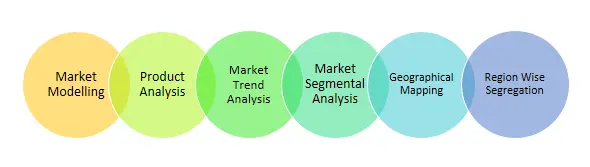
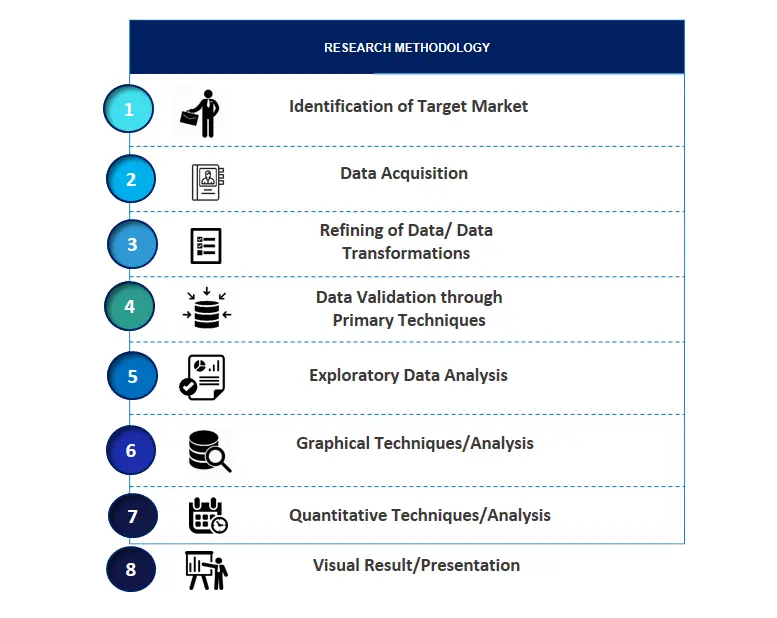
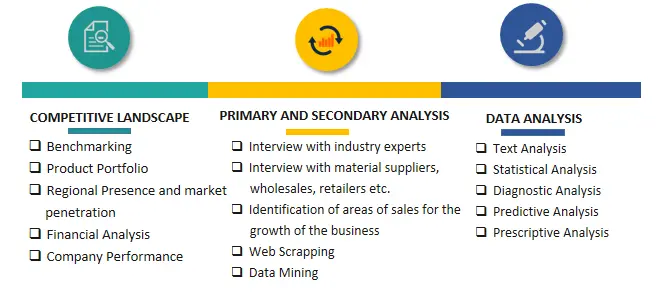
SPER Market Research’s methodology uses great emphasis on primary research to ensure that the market intelligence insights are up to date, reliable and accurate. Primary interviews are done with players involved in each phase of a supply chain to analyze the market forecasting. The secondary research method is used to help you fully understand how the future markets and the spending patterns look likes.

The report is based on in-depth qualitative and quantitative analysis of the Product Market. The quantitative analysis involves the application of various projection and sampling techniques. The qualitative analysis involves primary interviews, surveys, and vendor briefings.  The data gathered as a result of these processes are validated through experts opinion. Our research methodology entails an ideal mixture of primary and secondary initiatives.
SPER-Methodology-1

SPER-Methodology-2

SPER-Methodology-3


Frequently Asked Questions About This Report
PLACE AN ORDER
  • 15 % off
     
    $ 3250
  • 20 % off
             
    $ 4250
  • 25 % off
         
    $ 6250
Pre-Purchase Inquiry
SEND AN INQUIRY
NEED CUSTOMIZATION?
Request Customization
CALL OR EMAIL US
US:
India:
Email:
100% Secure Payment

SPER American Express
SPER VISA
SPER Master Card
SPER Mestro
SPER Paypal
SPER CCAvenues

Have a glance of the Report

  Download Free Sample

Looking for Customization?

 Customization Request

Have a Question?

 Reach Our Analysis Team

COVID-19 impact analysis?

 Request Analysis
Thought Leadership

Trusted by Industry Leaders

Our data-driven insights have influenced the strategy of 200+ reputed companies across the globe.

SPER-Astellas Pharma
SPER-Microsoft
SPER-EY
SPER-McKinsey
SPER-Bain
SPER-Max-Healthcare
SPER-DHL
SPER-IQVIA
SPER-Mitsubishi Logistics
SPER-PACCOR
SPER-Macmillan Education
SPER-Kankar IMRB
SPER-ITA
SPER-PWC
SPER-SAPTCA
SPER-Straumann
SPER-Danaher
SPER-AandM
SPER-MENARINI Silicon Biosystems
SPER-IPSOS
SPER-Heineken
HIPPA Compliant
GDPR Certified
ISO 27001
Peer Reviewed
Get Started Today

Your Competitive Advantage in
Pharmaceutical & Medical Technology
Markets

Join industry leaders leveraging AI-powered intelligence to make confident, data-driven decisions that accelerate breakthrough treatments and technologies to market.

No Credit Card Required
15-Minute Demo
Expert Guidance