Global Digital Textile Printer Market Trends 2034

Global Digital Textile Printer Market Growth, Size, Trends Analysis- By Machine Type, By Ink Type, By Material, By Technology, By Printing Process, By Application, By Distribution Channel – Regional Outlook, Competitive Strategies and Segment Forecast to 2034

Published: Feb-2026 Report ID: MACH2609 Pages: 1 - 149 Formats*:     
Category : Equipment and Machinery
According to SPER Market Research, the Global Digital Textile Printer Market is estimated to reach USD 4.87 billion by 2034 with a CAGR 5.94%.

Introduction and Overview
The report includes an in-depth analysis of the Global Digital Textile Printer Market, including market size and trends, product mix, applications, and supplier analysis.

 The Global Digital Textile Printer Market was valued at USD 2.9 billion in 2024 and is expected to grow at a CAGR of around 5.94 % from 2025 to 2034. The market is witnessing significant growth due to the rising demand for customized textile printing, rapid expansion of the fashion and apparel industry, and increasing adoption of sustainable printing technologies. Digital textile printers enable high-quality, fast, and cost-efficient printing while reducing water and chemical consumption. Technological advancements in printheads, inks, and automation systems, along with growing demand from home furnishing, sportswear, and advertising industries, are further accelerating market growth.

By Machine Type:
The single pass segment accounted for the largest share of the Digital Textile Printer Market in 2024. This segment holds a leading position due to its high-speed printing capability and suitability for large-scale textile production. Single pass printers complete printing in one movement, reducing production time and increasing efficiency. These printers are widely used in industrial applications such as fashion and home textiles. Growing demand for mass production and faster turnaround times supports adoption. In addition, technological advancements and automation compatibility improve productivity. These advantages continue to strengthen the segment’s importance in modern textile manufacturing and support overall market growth globally.

By Ink Type:
The disperse ink segment held the highest share in the Digital Textile Printer Market. This segment maintains a strong position because it is mainly used for polyester and synthetic fabrics, which are widely adopted in sportswear and apparel production. Disperse inks provide high color brightness, durability, and wash resistance, improving product quality. Increasing demand for polyester-based textiles has supported segment growth. These inks also perform efficiently in high-speed digital printing systems. In addition, their cost effectiveness and compatibility with modern textile printers continue to support widespread adoption, strengthening their contribution to overall digital textile printing market development globally.

By Material: 
The polyester segment accounted for the largest share in the Digital Textile Printer Market. This segment holds a significant position due to polyester’s wide use in fashion, sportswear, and home textile products. Polyester offers durability, flexibility, and cost efficiency, making it suitable for digital printing. It also works effectively with digital printing technologies such as sublimation printing. Increasing demand for performance fabrics and synthetic materials has strengthened adoption. In addition, polyester supports high-quality and long-lasting prints. Growing textile manufacturing and rising demand for affordable fabrics continue to reinforce polyester’s strong role in supporting digital textile printer market growth worldwide today.

By Technology:
The piezoelectric inkjet segment held the highest share in the Digital Textile Printer Market. This segment maintains a strong presence due to its ability to deliver high-resolution and precise printing results. This technology supports multiple ink types, increasing its flexibility in textile applications. It also offers better durability and efficiency compared to other printing technologies. Increasing demand for high-quality textile printing has supported adoption. In addition, its ability to print on various fabric types strengthens its importance. Continuous technological improvements and increasing industrial adoption continue to support the segment’s growth and contribution to digital textile printing applications globally.

By Printing Process:
The direct to fabric segment accounted for the largest share in the Digital Textile Printer Market. This segment holds a strong position because it allows direct printing on fabric without additional transfer steps. This improves production efficiency and reduces processing time. It is widely used in large-scale textile production such as apparel and home furnishing. This method also provides better color quality and durability. Increasing demand for efficient and cost-effective textile production supports adoption. In addition, growing industrial textile manufacturing continues to strengthen the importance of direct to fabric printing in supporting digital textile printer market growth globally.

By Application:
The fashion and clothing industry segment held the highest share in the Digital Textile Printer Market. This segment maintains a leading position due to increasing demand for customized and fashionable clothing. Digital printing allows manufacturers to produce attractive designs quickly and efficiently. Growing fast fashion trends and rising consumer preference for personalized apparel support adoption. In addition, expansion of online fashion retail has increased textile production. Digital textile printers help reduce production time and improve flexibility. These advantages continue to strengthen their use in fashion applications and support overall digital textile printer market growth across global textile manufacturing industries today.

By Distribution Channel:
The direct sales segment accounted for the largest share in the Digital Textile Printer Market. This segment holds a strong position because buyers prefer direct purchasing from manufacturers for better service and support. Direct sales provide installation assistance, technical training, and maintenance services. This improves operational efficiency and customer satisfaction. High equipment cost also encourages buyers to purchase directly for reliability. In addition, direct communication helps manufacturers understand customer requirements. These benefits continue to strengthen the importance of direct sales channels and support the adoption of digital textile printers across textile production industries worldwide today.

Regional Insights:
The Asia Pacific segment held the highest share in the Digital Textile Printer Market. This region maintains a strong position due to the presence of major textile manufacturing countries such as China and India. Increasing textile production and export activities support market growth. Low labor cost and expanding industrial infrastructure also encourage adoption. In addition, rising demand for digital textile printing and technological advancements strengthen regional growth. Government support and growing investment in textile manufacturing further contribute to adoption. These factors continue to support Asia Pacific’s strong contribution to the global digital textile printer market expansion and development today.

Market Competitive Landscape:
The Digital Textile Printer Market is highly consolidated. Some of the market key players are Aleph S.r.l., Durst Group, EFI (Electronics for Imaging), Epson, Hollanders Printing Systems, JK Group, Konica Minolta, Kornit Digital, Mimaki Engineering, MS Printing Solutions, Mutoh, Reggiani Machine, Roland DG, Seiko Epson Corporation, SPGPrints

Recent Developments:
  • In January 2025, Epson introduced its advanced garment- decorating and cloth printing platforms at the prints Expo, fastening on enhanced product effectiveness for short- run, on- demand vesture product. These systems feature coming generation printheads and essay technologies, specifically designed to deliver briskly publishing pets, superior image quality, and betteredeco-performance.
  • In May 2025, Durst expanded its portfolio in North America by introducing the KJet mongrel marker printer, designed for protean marker product.
  • In September 2024, Konica Minolta launched its upgraded C14010s press, equipped with white- color capability and automated color estimation, alongside the MGI JetVarnish 3D Web 400 at Labelexpo. The company also blazoned a strategic cooperation with First Citizens Bank for 2025, offering acclimatized backing results to grease outfit accessions, thereby accelerating the relinquishment of advanced digital printing technologies among guests.
  • In October 2024, Durst achieved a significant corner by manufacturing its 100th P5 TEX sub, a single- step sublimation printer with inline obsession, known for its energy effectiveness and water- grounded technology.
  • In September 2024, Roland DG Corporation unveiled the TY- 300 direct- to- film product transfer printer, offering exceptional image quality, high productivity, and cost effectiveness. This printer delivers vibrant colors and intricate details, meeting the demanding conditions of the vesture assiduity. Its inks and maquillages are certified under the OEKO- TEX ECO PASSPORT standard, icing compliance with global safety regulations and the absence of dangerous substances.

Scope of the report:
Report MetricDetails
Market size available for years2021-2034
Base year considered 2024
Forecast period2025-2034
Segments coveredBy Machine Type, By Ink Type, By Material, By Technology, By Printing Process, By Application, By Distribution Channel
Regions coveredNorth America, Latin America, Asia-Pacific, Europe, and Middle East & Africa
Companies CoveredAleph S.r.l., Durst Group, EFI (Electronics for Imaging), Epson, Hollanders Printing Systems, JK Group, Konica Minolta, Kornit Digital, Mimaki Engineering, MS Printing Solutions, Mutoh, Reggiani Machine, Roland DG, Seiko Epson Corporation, SPGPrints

Key Topics Covered in the Report
  • Global Digital Textile Printer Market Size (FY’2021–FY’2034)
  • Overview of Global Digital Textile Printer Market
  • Segmentation of Global Digital Textile Printer Market by Machine Type (Plotter, Scanner, Single pass)
  • Segmentation of Global Digital Textile Printer Market by Ink Type (Reactive ink, Acid ink, Disperse ink, Pigment ink, Other)
  • Segmentation of Global Digital Textile Printer Market by Material (Cotton, Polyester, Silk, Blended fabrics)
  • Segmentation of Global Digital Textile Printer Market by Technology (Thermal inkjet, Piezoelectric inkjet, Continuous inkjet, Thermal transfer, Electrostatic, Electrophotography, Others)
  • Segmentation of Global Digital Textile Printer Market by Printing Process (Direct to garment printing, Direct to fabrics)
  • Segmentation of Global Digital Textile Printer Market by Application (Fashion and clothing industry, home furnishing, Automotive and transportation, Healthcare and medical, Sports and fitness industry, Advertising and marketing, Others (aerospace, education, construction))
  • Segmentation of Global Digital Textile Printer Market by Distribution Channel (Direct sales, Indirect sales)
  • Statistical Snap of Global Digital Textile Printer Market
  • Expansion Analysis of Global Digital Textile Printer Market
  • Problems and Obstacles in Global Digital Textile Printer Market
  • Competitive Landscape in the Global Digital Textile Printer Market
  • Details on Current Investment in Global Digital Textile Printer Market
  • Competitive Analysis of Global Digital Textile Printer Market
  • Prominent Players in the Global Digital Textile Printer Market
  • SWOT Analysis of Global Digital Textile Printer Market
  • Global Digital Textile Printer Market Future Outlook and Projections (FY’2025–FY’2034)
  • Recommendations from Analyst

1. Introduction
1.1. Scope of the report
1.2. Market segment analysis 

2. Research Methodology
2.1. Research data source
2.1.1. Secondary Data
2.1.2. Primary Data
2.1.3. SPER’s internal database
2.1.4. Premium insight from KOL’s
2.2. Market size estimation
2.2.1. Top-down and Bottom-up approach
2.3. Data triangulation

3. Executive Summary

4. Market Dynamics
4.1. Driver, Restraint, Opportunity and Challenges analysis
4.1.1. Drivers
4.1.2. Restraints
4.1.3. Opportunities
4.1.4. Challenges

5. Market variable and outlook
5.1. SWOT Analysis
5.1.1. Strengths
5.1.2. Weaknesses
5.1.3. Opportunities
5.1.4. Threats
5.2. PESTEL Analysis
5.2.1. Political Landscape
5.2.2. Economic Landscape
5.2.3. Social Landscape
5.2.4. Technological Landscape
5.2.5. Environmental Landscape
5.2.6. Legal Landscape
5.3. PORTER’s Five Forces 
5.3.1. Bargaining power of suppliers
5.3.2. Bargaining power of buyers
5.3.3. Threat of Substitute
5.3.4. Threat of new entrant
5.3.5. Competitive rivalry
5.4. Heat Map Analysis

6. Competitive Landscape
6.1. Global Digital Textile Printer Market Manufacturing Base Distribution, Sales Area, Product Type 
6.2. Mergers & Acquisitions, Partnerships, Product Launch, and Collaboration in Global Digital Textile Printer Market

7. Global Digital Textile Printer Market, By Machine Type, (USD Million) 2021-2034 
7.1. Plotter
7.2. Scanner
7.3. Single pass

8. Global Digital Textile Printer Market, By Ink Type, (USD Million) 2021-2034 
8.1. Reactive ink
8.2. Acid ink
8.3. Disperse ink
8.4. Pigment ink
8.5. Other

9. Global Digital Textile Printer Market, By Material, (USD Million) 2021-2034 
9.1. Cotton
9.2. Polyester
9.3. Silk
9.4. Blended fabrics

10. Global Digital Textile Printer Market, By Technology, (USD Million) 2021-2034 
10.1. Thermal inkjet
10.2. Piezoelectric inkjet
10.3. Continuous inkjet
10.4. Thermal transfer
10.5. Electrostatic
10.6. Electrophotography
10.7. Others

11. Global Digital Textile Printer Market, By Printing Process, (USD Million) 2021-2034 
11.1. Direct to garment printing
11.2. Direct to fabrics

12. Global Digital Textile Printer Market, By Application, (USD Million) 2021-2034 
12.1. Fashion and clothing industry
12.2. Home furnishing
12.3. Automotive and transportation
12.4. Healthcare and medical
12.5. Sports and fitness industry
12.6. Advertising and marketing
12.7. Others (aerospace, education, construction)

13. Global Digital Textile Printer Market, By Distribution Channel, (USD Million) 2021-2034 
13.1. Direct sales
13.2. Indirect sales

14. Global Digital Textile Printer Market, (USD Million) 2021-2034 
14.1. Global Digital Textile Printer Market Size and Market Share

15. Global Digital Textile Printer Market, By Region, 2021-2034 (USD Million)
15.1. Asia-Pacific
15.1.1. Australia
15.1.2. China
15.1.3. India
15.1.4. Japan
15.1.5. South Korea
15.1.6. Rest of Asia-Pacific
15.2. Europe
15.2.1. France
15.2.2. Germany
15.2.3. Italy
15.2.4. Spain
15.2.5. United Kingdom
15.2.6. Rest of Europe
15.3. Middle East and Africa
15.3.1. Kingdom of Saudi Arabia 
15.3.2. United Arab Emirates
15.3.3. Qatar
15.3.4. South Africa
15.3.5. Egypt
15.3.6. Morocco
15.3.7. Nigeria
15.3.8. Rest of Middle-East and Africa
15.4. North America
15.4.1. Canada
15.4.2. Mexico
15.4.3. United States
15.5. Latin America
15.5.1. Argentina
15.5.2. Brazil
15.5.3. Rest of Latin America 

16. Company Profile
16.1. Aleph S.r.l.
16.1.1. Company details
16.1.2. Financial outlook
16.1.3. Product summary 
16.1.4. Recent developments
16.2. Durst Group
16.2.1. Company details
16.2.2. Financial outlook
16.2.3. Product summary 
16.2.4. Recent developments
16.3. EFI (Electronics for Imaging
16.3.1. Company details
16.3.2. Financial outlook
16.3.3. Product summary 
16.3.4. Recent developments
16.4. Epson
16.4.1. Company details
16.4.2. Financial outlook
16.4.3. Product summary 
16.4.4. Recent developments
16.5. Hollanders Printing Systems
16.5.1. Company details
16.5.2. Financial outlook
16.5.3. Product summary 
16.5.4. Recent developments
16.6. JK Group
16.6.1. Company details
16.6.2. Financial outlook
16.6.3. Product summary 
16.6.4. Recent developments
16.7. Konica Minolta
16.7.1. Company details
16.7.2. Financial outlook
16.7.3. Product summary 
16.7.4. Recent developments
16.8. Kornit Digital
16.8.1. Company details
16.8.2. Financial outlook
16.8.3. Product summary 
16.8.4. Recent developments
16.9. Mimaki Engineering    
16.9.1. Company details
16.9.2. Financial outlook
16.9.3. Product summary 
16.9.4. Recent developments
16.10. MS Printing Solutions
16.10.1. Company details
16.10.2. Financial outlook
16.10.3. Product summary 
16.10.4. Recent developments
16.11. Mutoh
16.11.1. Company details
16.11.2. Financial outlook
16.11.3. Product summary 
16.11.4. Recent developments
16.12. Reggiani Machine
16.12.1. Company details
16.12.2. Financial outlook
16.12.3. Product summary 
16.12.4. Recent developments
16.13. Roland DG
16.13.1. Company details
16.13.2. Financial outlook
16.13.3. Product summary 
16.13.4. Recent developments
16.14. Seiko Epson Corporation
16.14.1. Company details
16.14.2. Financial outlook
16.14.3. Product summary 
16.14.4. Recent developments
16.15. SPGPrints
16.15.1. Company details
16.15.2. Financial outlook
16.15.3. Product summary 
16.15.4. Recent developments
16.16. Others
 
17. Conclusion

18. List of Abbreviations

19. Reference Links

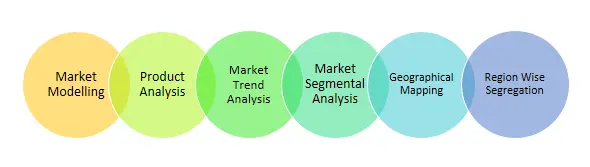
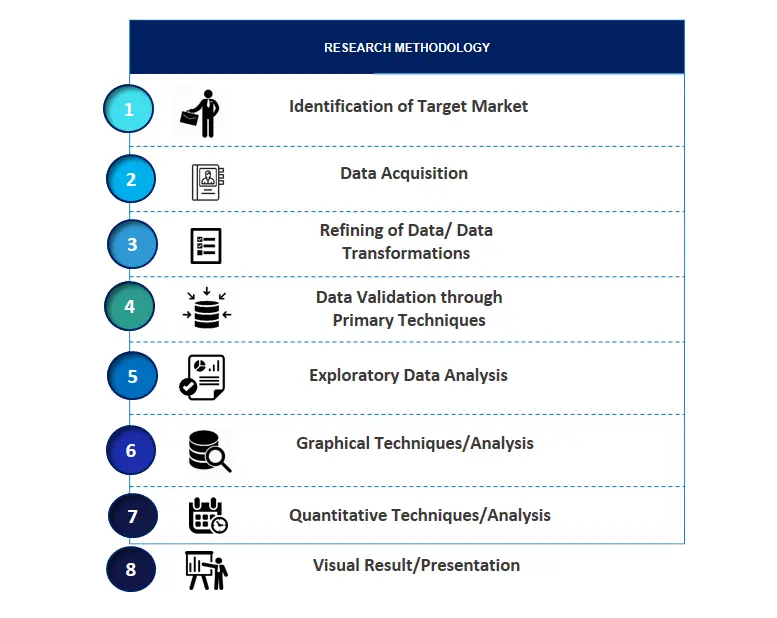
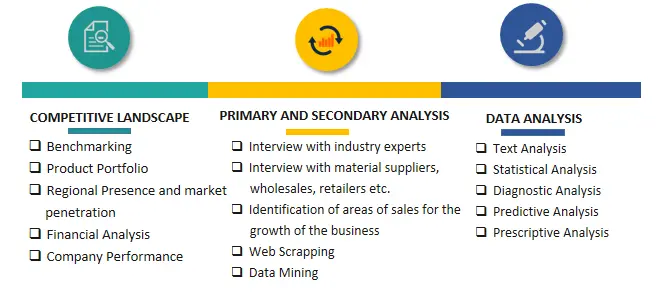
SPER Market Research’s methodology uses great emphasis on primary research to ensure that the market intelligence insights are up to date, reliable and accurate. Primary interviews are done with players involved in each phase of a supply chain to analyze the market forecasting. The secondary research method is used to help you fully understand how the future markets and the spending patterns look likes.

The report is based on in-depth qualitative and quantitative analysis of the Product Market. The quantitative analysis involves the application of various projection and sampling techniques. The qualitative analysis involves primary interviews, surveys, and vendor briefings.  The data gathered as a result of these processes are validated through experts opinion. Our research methodology entails an ideal mixture of primary and secondary initiatives.
SPER-Methodology-1

SPER-Methodology-2

SPER-Methodology-3


Frequently Asked Questions About This Report
PLACE AN ORDER
  • 15 % off
     
    $ 4250
  • 20 % off
             
    $ 5650
  • 25 % off
         
    $ 7450
Pre-Purchase Inquiry
SEND AN INQUIRY
NEED CUSTOMIZATION?
Request Customization
CALL OR EMAIL US
US:
India:
Email:
100% Secure Payment

SPER American Express
SPER VISA
SPER Master Card
SPER Mestro
SPER Paypal
SPER CCAvenues

Have a glance of the Report

  Download Free Sample

Looking for Customization?

 Customization Request

Have a Question?

 Reach Our Analysis Team

COVID-19 impact analysis?

 Request Analysis
Thought Leadership

Trusted by Industry Leaders

Our data-driven insights have influenced the strategy of 200+ reputed companies across the globe.

SPER-Astellas Pharma
SPER-Microsoft
SPER-EY
SPER-McKinsey
SPER-Bain
SPER-Max-Healthcare
SPER-DHL
SPER-IQVIA
SPER-Mitsubishi Logistics
SPER-PACCOR
SPER-Macmillan Education
SPER-Kankar IMRB
SPER-ITA
SPER-PWC
SPER-SAPTCA
SPER-Straumann
SPER-Danaher
SPER-AandM
SPER-MENARINI Silicon Biosystems
SPER-IPSOS
SPER-Heineken
HIPPA Compliant
GDPR Certified
ISO 27001
Peer Reviewed
Get Started Today

Your Competitive Advantage in
Pharmaceutical & Medical Technology
Markets

Join industry leaders leveraging AI-powered intelligence to make confident, data-driven decisions that accelerate breakthrough treatments and technologies to market.

No Credit Card Required
15-Minute Demo
Expert Guidance