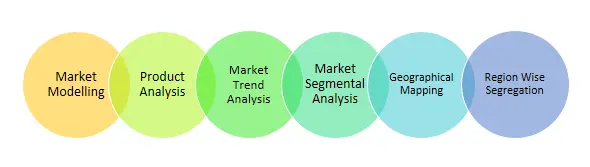
Global Cancer Biomarkers Market Trends and Forecast.

Global Cancer Biomarkers Market Growth, Size, Trends Analysis- By Product, By Cancer Type, By Application, By Technology, By End Use – Regional Outlook, Competitive Strategies and Segment Forecast to 2034

Published: Feb-2026 Report ID: HLCA2609 Pages: 1 - 117 Formats*:     
Category : Healthcare
According to SPER Market Research, the Global Cancer Biomarkers Market is estimated to reach USD 90.58 billion by 2034 with a CAGR 12.66%.

Introduction and Overview
The report includes an in-depth analysis of the Global Cancer Biomarkers Market, including market size and trends, product segments, applications, technologies, and supplier analysis.

The global Cancer Biomarkers Market was valued at USD 27.5 billion in 2024 and is expected to grow at a CAGR of around 12.66 % from 2025 to 2034. The market is witnessing strong growth due to the rising global incidence of cancer and increasing demand for early and accurate diagnostic solutions. Cancer biomarkers play a crucial role in detection, prognosis, drug development, and personalized medicine. Advancements in genomics, proteomics, and imaging technologies, along with expanding research initiatives, further support market expansion.

By Product:
In the Global Cancer Biomarkers Market, the consumables category holds major portion of industry revenue, as reagents, assay kits, and other disposable products are essential for routine biomarker testing in laboratories and clinical settings. These items support high-throughput diagnostics and drug development workflows, driving consistent demand. Instruments, including PCR machines and next-generation sequencing platforms, are also key contributors due to their role in sensitive and accurate detection of cancer biomarkers. Software solutions, while smaller in overall share, are increasingly important for data analysis and interpretation, particularly with advanced genomic and proteomic profiling tools.

By Cancer Type:
Within the cancer type segmentation of the market, breast cancer biomarkers account for a largest share of global revenues, driven by the high incidence of the disease and the widespread use of markers like CA 15-3 and CA 27-29 for early detection and monitoring. Biomarkers for other cancers such as prostate, colorectal, lung, cervical, and liver cancer also contribute meaningfully, but breast cancer remains a prominent focus due to disease prevalence and extensive screening programs. Ongoing research and clinical adoption of specific biomarkers for diverse cancer types further expand segment growth.

By Application Segment:
In terms of applications, diagnostics accounts for a large share of the Cancer Biomarkers Market as early and precise detection of cancer significantly improves clinical outcomes and treatment planning. Biomarker tests are widely used to identify disease presence, monitor progression, and guide therapy choices through minimally invasive methods like liquid biopsies. The drug discovery and development segment also plays a key role, leveraging biomarkers to enhance therapeutic targeting and reduce late-stage clinical failures. Personalized medicine growth further supports both diagnostics and drug development applications, enabling tailored therapies based on individual molecular profiles. Other applications continue to contribute to the broad utilization of biomarkers.

By Technology:
Among technology categories, OMICS technologies — including genomics, proteomics, and related molecular profiling methods — represent a major share of the Cancer Biomarkers Market due to their comprehensive analysis capabilities that reveal molecular alterations underlying cancer. These approaches facilitate early detection, prognosis, and therapy selection. Within OMICS, genomics and proteomics are extensively leveraged for identifying actionable biomarkers. Imaging technologies such as magnetic resonance imaging (MRI), computed tomography (CT), positron emission tomography (PET), ultrasound, and mammography complement molecular diagnostics by providing structural and functional insights, but OMICS remains central to market revenue and innovation.

By End Use:
In the Cancer Biomarkers Market, hospitals represent a key end-use category, as they integrate biomarker testing into clinical workflows for diagnosis and treatment planning, handling large patient volumes. Diagnostic laboratories also contribute significantly, offering specialized testing platforms that support high-throughput analyses and complex molecular assays. Biopharmaceutical companies use biomarkers in drug development and targeted therapy research, while academic and research institutions advance discovery and validation of novel biomarkers. Other end-use segments, including independent clinics and specialized diagnostic centers, further broaden the market’s application landscape, underscoring the diverse utility of biomarker technologies.

Regional Insights:
North America accounts for a highest share of the Global Cancer Biomarkers Market due to advanced healthcare infrastructure, strong research funding, high adoption of precision medicine, and the presence of leading biotechnology companies, particularly in the U.S. Europe also represents a considerable portion of market revenue, supported by government-backed cancer screening programs and growing investments in molecular diagnostics. Meanwhile, Asia Pacific is witnessing the fastest expansion, driven by rising cancer incidence, improving healthcare facilities, and increasing awareness in countries such as China, India, and Japan. Latin America and the Middle East & Africa show steady progress with improving diagnostic capabilities and healthcare investments.

Market Competitive Landscape:
The Cancer Biomarkers Market is highly consolidated. Some of the market key players are
Abbott Laboratories, Agilent Technologies, Bio-Rad Laboratories, Becton, Dickinson and Company, BioGenex, Centogene, F. Hoffmann-La Roche, Hologic, INOVIQ, Illumina, Merck & Co., QIAGEN, Sino Biological, Sysmex Corporation, Thermo Fisher Scientific

Recent Developments:
  • In August 2024, Illumina, Inc. entered FDA blessing for its in vitro individual test, TruSight Oncology Comprehensive, which analyzes over 500 genes in a case's solid excrescence. This test aimed to enhance the identification of oncology biomarkers, marking a major advancement in individualized cancer treatment by enabling more precise and targeted curatives.

Scope of the report:

Report MetricDetails
Market size available for years2021-2034
Base year considered2024
Forecast period2025-2034
Segments coveredBy Product, By Cancer Type, By Application, By Technology, By End Use
Regions coveredNorth America, Latin America, Asia-Pacific,Europe, and Middle East and , Africa
Companies Coveredbbott Laboratories; Agilent Technologies; Bio-Rad Laboratories; Becton, Dickinson and Company; BioGenex; Centogene; F. Hoffmann-La Roche; Hologic; INOVIQ; Illumina; Merck & Co.; QIAGEN; Sino Biological; Sysmex Corporation; Thermo Fisher Scientific.

Key Topics Covered in the Report
  • Global Cancer Biomarkers Market Size (FY’2021–FY’2034)
  • Overview of Global Cancer Biomarkers Market
  • Segmentation of Global Cancer Biomarkers Market by Product (Instruments, Consumables, Software)
  • Segmentation of Global Cancer Biomarkers Market by Cancer Type (Breast cancer, Prostate cancer, Colorectal cancer, Cervical cancer, Liver cancer, Lung cancer, other cancer types)
  • Segmentation of Global Cancer Biomarkers Market by Application (Drug discovery and development, Diagnostics, Personalized medicine, other applications)
  • Segmentation of Global Cancer Biomarkers Market by Technology (OMICS technologies – Proteomics, Genomics, Other OMICS technologies; Imaging technologies – Ultrasound, Computed tomography, Magnetic resonance imaging, Positron emission tomography, Mammography)
  • Segmentation of Global Cancer Biomarkers Market by End Use (Hospitals, Diagnostic laboratories, Biopharmaceutical companies, Academic and research institutions, other end use)  
  • Statistical Snap of Global Cancer Biomarkers Market
  • Expansion Analysis of Global Cancer Biomarkers Market
  • Problems and Obstacles in Global Cancer Biomarkers Market
  • Competitive Landscape in the Global Cancer Biomarkers Market
  • Details on Current Investment in Global Cancer Biomarkers Market
  • Competitive Analysis of Global Cancer Biomarkers Market
  • Prominent Players in the Global Cancer Biomarkers Market
  • SWOT Analysis of Global Cancer Biomarkers Market
  • Global Cancer Biomarkers Market Future Outlook and Projections (FY’2025–FY’2034)
  • Recommendations from Analyst

1. Introduction
    1.1. Scope of the report
    1.2. Market segment analysis 

2. Research Methodology
    2.1. Research data source
      2.1.1. Secondary Data
      2.1.2. Primary Data
      2.1.3. SPER’s internal database
      2.1.4. Premium insight from KOL’s
    2.2. Market size estimation
      2.2.1. Top-down and Bottom-up approach
    2.3. Data triangulation

3. Executive Summary

4. Market Dynamics
    4.1. Driver, Restraint, Opportunity and Challenges analysis
      4.1.1. Drivers
      4.1.2. Restraints
      4.1.3. Opportunities
      4.1.4. Challenges

5. Market variable and outlook
    5.1. SWOT Analysis
      5.1.1. Strengths
      5.1.2. Weaknesses
      5.1.3. Opportunities
      5.1.4. Threats
    5.2. PESTEL Analysis
      5.2.1. Political Landscape
      5.2.2. Economic Landscape
      5.2.3. Social Landscape
      5.2.4. Technological Landscape
      5.2.5. Environmental Landscape
      5.2.6. Legal Landscape
    5.3. PORTER’s Five Forces 
      5.3.1. Bargaining power of suppliers
      5.3.2. Bargaining power of buyers
      5.3.3. Threat of Substitute
      5.3.4. Threat of new entrant
      5.3.5. Competitive rivalry
    5.4. Heat Map Analysis

6. Competitive Landscape
   6.1. Global Cancer Biomarkers Market Manufacturing Base Distribution, Sales Area, Product Type 
   6.2. Mergers & Acquisitions, Partnerships, Product Launch, and Collaboration in Global Cancer Biomarkers Market

7. Global Cancer Biomarkers Market, By Product, (USD Million) 2021-2034 
   7.1. Instruments
   7.2. Consumables
   7.3. Software

8. Global Cancer Biomarkers Market, By Cancer Type, (USD Million) 2021-2034 
   8.1. Breast cancer
   8.2. Prostate cancer
   8.3. Colorectal cancer
   8.4. Cervical cancer
   8.5. Liver cancer
   8.6. Lung cancer
   8.7. Other cancer types

9. Global Cancer Biomarkers Market, By Application, (USD Million) 2021-2034 
   9.1. Drug discovery and development
   9.2. Diagnostics
   9.3. Personalized medicine
   9.4. Other applications

10. Global Cancer Biomarkers Market, By Technology, (USD Million) 2021-2034 
  10.1. OMICS technologies
    10.1.1. Proteomics
    10.1.2. Genomics
    10.1.3. Other OMICS technologies
 10.2. Imaging technologies
   10.2.1. Ultrasound
   10.2.2. Computed tomography
   10.2.3. Magnetic resonance imaging
   10.2.4. Positron emission tomography
   10.2.5. Mammography

11. Global Cancer Biomarkers Market, By End Use, (USD Million) 2021-2034 
   11.1. Hospitals
   11.2. Diagnostic laboratories
   11.3. Biopharmaceutical companies
   11.4. Academic and research institutions
   11.5. Other end use

12. Global Cancer Biomarkers Market, (USD Million) 2021-2034 
   12.1. Global Cancer Biomarkers Market Size and Market Share

13. Global Cancer Biomarkers Market, By Region, 2021-2034 (USD Million)
   13.1. Asia-Pacific
     13.1.1. Australia
     13.1.2. China
     13.1.3. India
     13.1.4. Japan
     13.1.5. South Korea
     13.1.6. Rest of Asia-Pacific
   13.2. Europe
     13.2.1. France
     13.2.2. Germany
     13.2.3. Italy
     13.2.4. Spain
     13.2.5. United Kingdom
     13.2.6. Rest of Europe
   13.3. Middle East and Africa
     13.3.1. Kingdom of Saudi Arabia 
     13.3.2. United Arab Emirates
     13.3.3. Qatar
     13.3.4. South Africa
     13.3.5. Egypt
     13.3.6. Morocco
     13.3.7. Nigeria
     13.3.8. Rest of Middle-East and Africa
   13.4. North America
     13.4.1. Canada
     13.4.2. Mexico
     13.4.3. United States
   13.5. Latin America
     13.5.1. Argentina
     13.5.2. Brazil
     13.5.3. Rest of Latin America 

14. Company Profile
   14.1. Abbott Laboratories
     14.1.1. Company details
     14.1.2. Financial outlook
     14.1.3. Product summary 
     14.1.4. Recent developments
  14.2. Agilent Technologies
     14.2.1. Company details
     14.2.2. Financial outlook
     14.2.3. Product summary 
     14.2.4. Recent developments
 14.3.  Bio-Rad Laboratories
     14.3.1. Company details
     14.3.2. Financial outlook
     14.3.3. Product summary 
     14.3.4. Recent developments
 14.4.  Becton, Dickinson and Company
     14.4.1. Company details
     14.4.2. Financial outlook
     14.4.3. Product summary 
     14.4.4. Recent developments
 14.5. BioGenex
     14.5.1. Company details
     14.5.2. Financial outlook
     14.5.3. Product summary 
     14.5.4. Recent developments
 14.6. BioGenex
     14.6.1. Company details
     14.6.2. Financial outlook
     14.6.3. Product summary 
     14.6.4. Recent developments
 14.7. BioGenex
     14.7.1. Company details
     14.7.2. Financial outlook
     14.7.3. Product summary 
     14.7.4. Recent developments
 14.8. Hologic
     14.8.1. Company details
     14.8.2. Financial outlook
     14.8.3. Product summary 
     14.8.4. Recent developments
 14.9. INOVIQ
     14.9.1. Company details
     14.9.2. Financial outlook
     14.9.3. Product summary 
     14.9.4. Recent developments
 14.10. Illumina
     14.10.1. Company details
     14.10.2. Financial outlook
     14.10.3. Product summary 
     14.10.4. Recent developments
 14.11. Merck & Co.
     14.11.1. Company details
     14.11.2. Financial outlook
     14.11.3. Product summary 
     14.11.4. Recent developments
 14.12. QIAGEN
     14.12.1. Company details
     14.12.2. Financial outlook
     14.12.3. Product summary 
     14.12.4. Recent developments
 14.13. Sino Biological
     14.13.1. Company details
     14.13.2. Financial outlook
     14.13.3. Product summary 
     14.13.4. Recent developments
 14.14. Sysmex Corporation
     14.14.1. Company details
     14.14.2. Financial outlook
     14.14.3. Product summary 
     14.14.4. Recent developments
 14.15. Thermo Fisher Scientific
     14.15.1. Company details
     14.15.2. Financial outlook
     14.15.3. Product summary 
     14.15.4. Recent developments    
 14.16. Others

15. Conclusion

16. List of Abbreviations

17. Reference Links


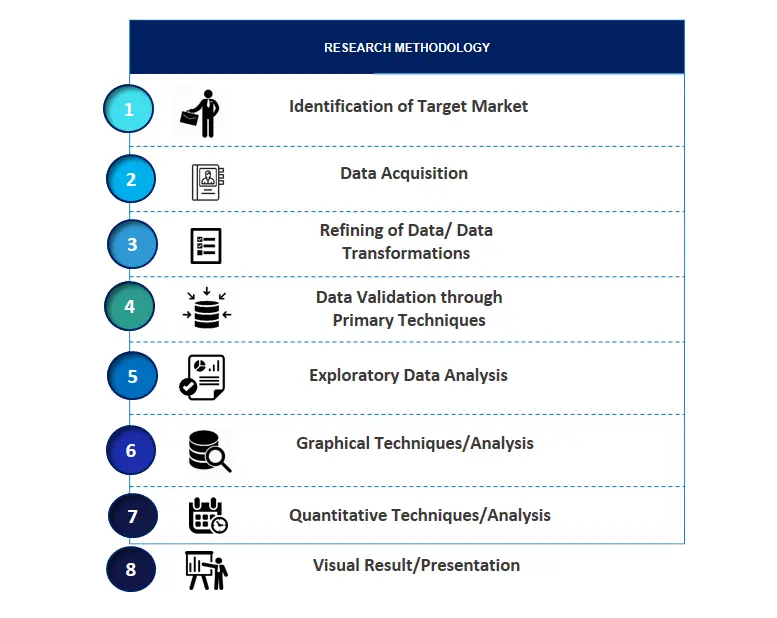
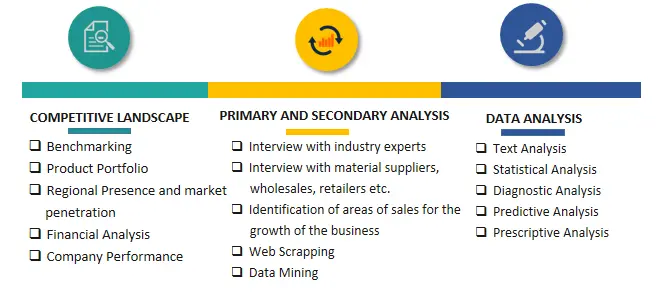
SPER Market Research’s methodology uses great emphasis on primary research to ensure that the market intelligence insights are up to date, reliable and accurate. Primary interviews are done with players involved in each phase of a supply chain to analyze the market forecasting. The secondary research method is used to help you fully understand how the future markets and the spending patterns look likes.

The report is based on in-depth qualitative and quantitative analysis of the Product Market. The quantitative analysis involves the application of various projection and sampling techniques. The qualitative analysis involves primary interviews, surveys, and vendor briefings.  The data gathered as a result of these processes are validated through experts opinion. Our research methodology entails an ideal mixture of primary and secondary initiatives.
SPER-Methodology-1

SPER-Methodology-2

SPER-Methodology-3


Frequently Asked Questions About This Report
PLACE AN ORDER
  • 15 % off
     
    $ 4250
  • 20 % off
             
    $ 5650
  • 25 % off
         
    $ 7450
Pre-Purchase Inquiry
SEND AN INQUIRY
NEED CUSTOMIZATION?
Request Customization
CALL OR EMAIL US
US:
India:
Email:
100% Secure Payment

SPER American Express
SPER VISA
SPER Master Card
SPER Mestro
SPER Paypal
SPER CCAvenues

Have a glance of the Report

  Download Free Sample

Looking for Customization?

 Customization Request

Have a Question?

 Reach Our Analysis Team

COVID-19 impact analysis?

 Request Analysis
Thought Leadership

Trusted by Industry Leaders

Our data-driven insights have influenced the strategy of 200+ reputed companies across the globe.

SPER-Astellas Pharma
SPER-Microsoft
SPER-EY
SPER-McKinsey
SPER-Bain
SPER-Max-Healthcare
SPER-DHL
SPER-IQVIA
SPER-Mitsubishi Logistics
SPER-PACCOR
SPER-Macmillan Education
SPER-Kankar IMRB
SPER-ITA
SPER-PWC
SPER-SAPTCA
SPER-Straumann
SPER-Danaher
SPER-AandM
SPER-MENARINI Silicon Biosystems
SPER-IPSOS
SPER-Heineken
HIPPA Compliant
GDPR Certified
ISO 27001
Peer Reviewed
Get Started Today

Your Competitive Advantage in
Pharmaceutical & Medical Technology
Markets

Join industry leaders leveraging AI-powered intelligence to make confident, data-driven decisions that accelerate breakthrough treatments and technologies to market.

No Credit Card Required
15-Minute Demo
Expert Guidance