Global Fatty Acids Market

Global Fatty Acids Market Growth, Size, Trends Analysis-By Product Type, Source, Manufacturing Process, Application, End Use – Regional Outlook, Competitive Strategies and Segment Forecast to 2035

Published: Apr-2026 Report ID: FOOD2603 Pages: 1 - 250 Formats*:     
Category : Food & Beverages
According to SPER Market Research, the Global Fatty Acids Market is estimated to reach USD 8.42 billion by 2035 with a CAGR 4.95%.

Introduction and Overview
The report includes an in-depth analysis of the Global Fatty Acids Market, covering market size and trends, product mix, applications, and supplier analysis. 

The global Fatty Acids Market was valued at USD 5.2 billion in 2024 and is expected to grow at a CAGR of around 4.95% from 2026 to 2035. The market is experiencing steady growth due to rising demand from the personal care, food & beverage, and pharmaceutical industries. Increasing health awareness, expanding use of functional foods and dietary supplements, and growing industrial applications further drive demand. Additionally, the shift toward bio-based chemicals, biodiesel production, and sustainable raw materials supports continued market expansion.

By Product Type:
By product type, saturated fatty acids dominate the global fatty acids market due to their extensive use across soaps, detergents, personal care products, lubricants, and industrial applications. Fatty acids such as stearic, palmitic, and lauric acids are widely preferred for their stability, functional performance, and cost efficiency. While polyunsaturated fatty acids, including omega-3 and omega-6, are gaining traction in nutraceuticals and functional foods, their higher costs and limited industrial applicability restrict overall dominance. Specialty fatty acids serve niche, high-value applications, but saturated fatty acids continue to hold the largest market share due to broad end-use adoption.

By Source:
Based on source, vegetable oils represent the dominant segment in the fatty acids market. Oils such as palm, soybean, rapeseed, sunflower, and coconut are widely used due to abundant availability, cost effectiveness, and established global supply chains. The increasing shift toward plant-based, renewable, and sustainable raw materials further strengthens this segment’s dominance. Animal fats and marine oils account for smaller shares, mainly serving specific applications such as pharmaceuticals and animal nutrition. Microbial sources are emerging but remain limited by higher production costs. Overall, vegetable oils continue to lead due to scalability, versatility, and strong demand across industries.

By Application:
Based on application, the personal care and cosmetics segment dominate the fatty acids market. Fatty acids are widely used in skincare, haircare, soaps, detergents, and cosmetic formulations for their emulsifying, moisturizing, and cleansing properties. Rising consumer demand for natural and bio-based personal care products continues to support strong growth in this segment. Food and beverages represent another major application, driven by functional foods and dietary supplements. Industrial applications, pharmaceuticals, and biofuels contribute steadily but hold comparatively smaller shares. The consistent global demand for personal care products ensures this segment remains the leading application area.

Regional Insights:
Asia Pacific dominates the global fatty acids market, supported by large-scale production capacity, abundant raw material availability, and strong demand from food, personal care, and industrial sectors. Countries such as China, India, Indonesia, and Malaysia play a major role due to extensive palm oil and oleochemical industries. North America and Europe follow, driven by demand for specialty, pharmaceutical, and sustainable fatty acids, along with strict quality standards. Latin America shows steady growth due to expanding food and biodiesel industries, while the Middle East and Africa market grows gradually with rising industrial and consumer demand.

Market Competitive Landscape:
The Fatty Acids Market is highly consolidated. Some of the market key players are Akzo Nobel, BASF SE, Ashland Inc., Eastman Chemical Company, DOW, Croda International Plc, Cargill Incorporated, Arizona Chemicals, Koninklijke DSM NV, and Oleon N.V.

Recent Developments:
  • In January 2025, Emery Oleochemicals formed an exclusive distribution cooperation with LEHVOSS Functional Fluids for its products including esters, polyols, and carbon/ adipose acids — across Europe. This collaboration is anticipated to enhance Emery Oleochemicals’ request presence in the region.
  • In December 2024, BASF partnered with Acies Bio to develop sustainable turmoil technology using renewable methanol to produce adipose alcohols, crucial constituents in particular and home care products. The collaboration aimed to influence Acies Bio’s OneCarbonBio platform and BASF’s process development moxie to diversify renewable feedstocks and enhance force chain adaptability.
  • In October 2024, BASF SE introduced Emulgade Verde 10 MS to broaden its polyglyceryl adipose acid ester technology, aligning with trends in natural phrasings. This new protean O/ W emulsifier delivers sustainability advantages along with demonstrated high performance.


Scope of the report:
Report MetricDetails
Market size available for years2022-2035
Base year considered 2025
Forecast period2026-2035
Segments coveredBy Product Type, Source, Manufacturing Process, Application, End Use
Regions coveredNorth America, Latin America, Asia-Pacific, Europe, and Middle East & Africa
Companies CoveredAkzo Nobel, BASF SE, Ashland Inc., Eastman Chemical Company, DOW, Croda International Plc, Cargill Incorporated, Arizona Chemicals, Koninklijke DSM NV, and Oleon N.V.

Key Topics Covered in the Report
  • Global Fatty Acids Market Size (FY’2022–FY’2035)
  • Overview of Global Fatty Acids Market
  • Segmentation of Global Fatty Acids Market by Product Type (Saturated fatty acids, Monounsaturated fatty acids, Polyunsaturated fatty acids, Specialty fatty acids)
  • Segmentation of Global Fatty Acids Market by Source (Vegetable oils, Animal fats, Marine oils, Microbial sources)
  • Segmentation of Global Fatty Acids Market by Application (Food & beverages, Personal care & cosmetics, Pharmaceuticals, Industrial applications, Biofuels & energy, Animal feed)
  • Segmentation of Global Fatty Acids Market by End Use (Food & beverage industry, Cosmetics & personal care industry, pharmaceutical industry, Chemical industry, Automotive industry, Energy & power industry, Agriculture industry)
  • Statistical Snap of Global Fatty Acids Market
  • Expansion Analysis of Global Fatty Acids Market
  • Problems and Obstacles in Global Fatty Acids Market
  • Competitive Landscape in the Global Fatty Acids Market
  • Details on Current Investment in Global Fatty Acids Market
  • Competitive Analysis of Global Fatty Acids Market
  • Prominent Players in the Global Fatty Acids Market
  • SWOT Analysis of Global Fatty Acids Market
  • Global Fatty Acids Market Future Outlook and Projections (FY’2026–FY’2035)
  • Recommendations from Analyst

1. Introduction
1.1. Scope of the report
1.2. Market segment analysis 

2. Research Methodology
2.1. Research data source
2.1.1. Secondary Data
2.1.2. Primary Data
2.1.3. SPER’s internal database
2.1.4. Premium insight from KOL’s
2.2. Market size estimation
    2.2.1. Top-down and Bottom-up approach
2.3. Data triangulation

3. Executive Summary

4. Market Dynamics
4.1. Driver, Restraint, Opportunity and Challenges analysis
4.1.1. Drivers
4.1.2. Restraints
4.1.3. Opportunities
4.1.4. Challenges

5. Market variable and outlook
5.1. SWOT Analysis
5.1.1. Strengths
5.1.2. Weaknesses
5.1.3. Opportunities
5.1.4. Threats
5.2. PESTEL Analysis
5.2.1. Political Landscape
5.2.2. Economic Landscape
5.2.3. Social Landscape
5.2.4. Technological Landscape
5.2.5. Environmental Landscape
5.2.6. Legal Landscape
5.3. PORTER’s Five Forces 
5.3.1. Bargaining power of suppliers
5.3.2. Bargaining power of buyers
5.3.3. Threat of Substitute
5.3.4. Threat of new entrant
5.3.5. Competitive rivalry
5.4. Heat Map Analysis

6. Competitive Landscape
6.1. Global Fatty Acids Market Manufacturing Base Distribution, Sales Area, Product Type 
6.2. Mergers & Acquisitions, Partnerships, Product Launch, and Collaboration in Global Fatty Acids Market

7. Global Fatty Acids Market, By Product Type, (USD Million) 2022-2035
7.1. Saturated fatty acids
7.1.1. Stearic acid
7.1.2. Palmitic acid
7.1.3. Lauric acid
7.1.4. Myristic acid
7.1.5. Caprylic acid
7.1.6. Capric acid
7.1.7. Others
7.2. Monounsaturated fatty acids
7.2.1. Oleic acid
7.2.2. Palmitoleic acid
7.2.3. Others
7.3. Polyunsaturated fatty acids
    7.3.1. Omega-3 fatty acids
7.3.2. EPA (Eicosapentaenoic acid)
7.3.3. Dha (docosahexaenoic acid)
7.3.4. Ala (alpha-linolenic acid)
7.3.5. Omega-6 fatty acids
7.3.6. Linoleic acid
7.3.7. Arachidonic acid
7.3.8. Others
7.3.9. Omega-9 fatty acids
7.4. Specialty fatty acids
7.4.1. Conjugated fatty acids
7.4.2. Branched-chain fatty acids
7.4.3. Trans fatty acids
7.4.4. Others

8. Global Fatty Acids Market, By Source, (USD Million) 2022-2035
8.1. Vegetable oils
8.1.1. Palm oil
8.1.2. Soybean oil
8.1.3. Rapeseed/canola oil
8.1.4. Sunflower oil
8.1.5. Coconut oil
8.1.6. Palm kernel oil
8.1.7. Olive oil
8.1.8. Others
8.2. Animal fats
8.2.1. Tallow
8.2.2. Lard
8.2.3. Butter fat
8.2.4. Others
8.3. Marine oils
8.3.1. Fish oil
8.3.2. Algal oil
8.3.3. Krill oil
8.3.4. Others
8.4. Microbial sources
8.4.1. Bacteria
8.4.2. Fungi
8.4.3. Microalgae
8.4.4. Others

9. Global Fatty Acids Market, By Manufacturing Process, (USD Million) 2022-2035
9.1. Fat splitting/hydrolysis
9.1.1. Continuous process
9.1.2. Batch process
9.1.3. Semi-continuous process
9.2. Fractionation
9.2.1. Dry fractionation
9.2.2. Wet fractionation
9.2.3. Solvent fractionation
9.3. Hydrogenation
9.4. Enzymatic processes
9.5. Distillation
9.6. Others

10. Global Fatty Acids Market, By Application, (USD Million) 2022-2035
10.1. Food & beverages
10.1.1. Bakery & confectionery
10.1.2. Dairy products
10.1.3. Functional foods & dietary supplements
10.1.4. Infant formula
10.1.5. Others
10.2. Personal care & cosmetics
10.2.1. Skincare
10.2.2. Haircare
10.2.3. Soaps & detergents
10.2.4. Others
10.3. Pharmaceuticals
10.3.1. Dietary supplements
10.3.2. Drug delivery systems
10.3.3. Active pharmaceutical ingredients
10.3.4. Others
10.4. Industrial applications
10.4.1. Lubricants & greases
10.4.2. Rubber & plastics
10.4.3. Textiles
10.4.4. Paints & coatings
10.4.5. Others
10.5. Biofuels & energy
10.5.1. Biodiesel
10.5.2. Renewable diesel
10.5.3. Others
10.6. Animal feed
10.7. Others

11. Global Fatty Acids Market, By End Use, (USD Million) 2022-2035
11.1. Food & beverage industry
11.2. Cosmetics & personal care industry
11.3. Pharmaceutical industry
11.4. Chemical industry
11.5. Automotive industry
11.6. Energy & power industry
11.7. Agriculture industry
11.8. Others

12. Global Fatty Acids Market, (USD Million) 2022-2035
    12.1. Global Fatty Acids Market Size and Market Share

13. Global Fatty Acids Market, By Region, 2022-2035 (USD Million)
13.1. Asia-Pacific
13.1.1. Australia
13.1.2. China
13.1.3. India
13.1.4. Japan
13.1.5. South Korea
13.1.6. Rest of Asia-Pacific
13.2. Europe
13.2.1. France
13.2.2. Germany
13.2.3. Italy
13.2.4. Spain
13.2.5. United Kingdom
13.2.6. Rest of Europe
13.3. Middle East and Africa
13.3.1. Kingdom of Saudi Arabia 
13.3.2. United Arab Emirates
13.3.3. Qatar
13.3.4. South Africa
13.3.5. Egypt
13.3.6. Morocco
13.3.7. Nigeria
13.3.8. Rest of Middle-East and Africa
13.4. North America
13.4.1. Canada
13.4.2. Mexico
13.4.3. United States
13.5. Latin America
13.5.1. Argentina
13.5.2. Brazil
13.5.3. Rest of Latin America 

14. Company Profile
14.1. Akzo Nobel
14.1.1. Company details
14.1.2. Financial outlook
14.1.3. Product summary 
14.1.4. Recent developments
14.2. BASF SE
14.2.1. Company details
14.2.2. Financial outlook
14.2.3. Product summary 
14.2.4. Recent developments
14.3. Ashland Inc.
14.3.1. Company details
14.3.2. Financial outlook
14.3.3. Product summary 
14.3.4. Recent developments
14.4. Eastman Chemical Company
14.4.1. Company details
14.4.2. Financial outlook
14.4.3. Product summary 
14.4.4. Recent developments
14.5. DOW
14.5.1. Company details
14.5.2. Financial outlook
14.5.3. Product summary 
14.5.4. Recent developments
14.6. Croda International Plc
14.6.1. Company details
14.6.2. Financial outlook
14.6.3. Product summary 
14.6.4. Recent developments
14.7. Cargill Incorporated
14.7.1. Company details
14.7.2. Financial outlook
14.7.3. Product summary 
14.7.4. Recent developments
14.8. Arizona Chemicals
14.8.1. Company details
14.8.2. Financial outlook
14.8.3. Product summary 
14.8.4. Recent developments
14.9. Koninklijke DSM NV
14.9.1. Company details
14.9.2. Financial outlook
14.9.3. Product summary 
14.9.4. Recent developments
14.10. Oleon N.V.
14.10.1. Company details
14.10.2. Financial outlook
14.10.3. Product summary 
14.10.4. Recent developments
14.11. Others

15. Conclusion

16. List of Abbreviations

17. Reference Links

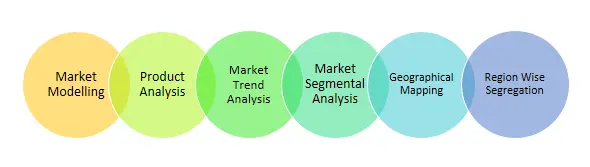
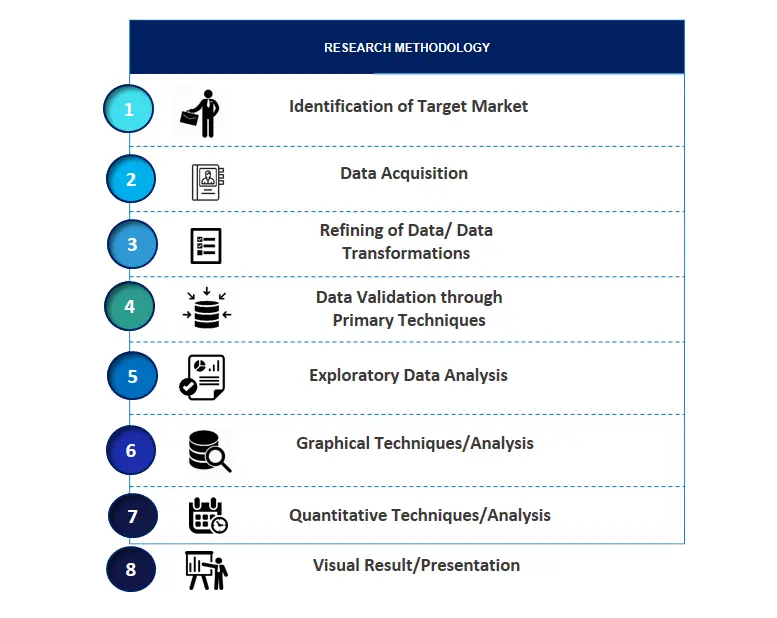
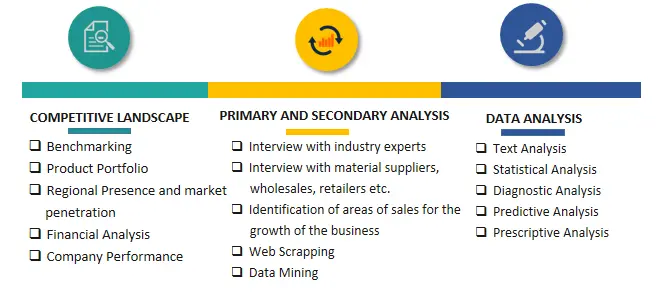
SPER Market Research’s methodology uses great emphasis on primary research to ensure that the market intelligence insights are up to date, reliable and accurate. Primary interviews are done with players involved in each phase of a supply chain to analyze the market forecasting. The secondary research method is used to help you fully understand how the future markets and the spending patterns look likes.

The report is based on in-depth qualitative and quantitative analysis of the Product Market. The quantitative analysis involves the application of various projection and sampling techniques. The qualitative analysis involves primary interviews, surveys, and vendor briefings.  The data gathered as a result of these processes are validated through experts opinion. Our research methodology entails an ideal mixture of primary and secondary initiatives.
SPER-Methodology-1

SPER-Methodology-2

SPER-Methodology-3


Frequently Asked Questions About This Report
PLACE AN ORDER
  • 15 % off
     
    $ 3250
  • 20 % off
             
    $ 4250
  • 25 % off
         
    $ 6250
Pre-Purchase Inquiry
SEND AN INQUIRY
NEED CUSTOMIZATION?
Request Customization
CALL OR EMAIL US
US:
India:
Email:
100% Secure Payment

SPER American Express
SPER VISA
SPER Master Card
SPER Mestro
SPER Paypal
SPER CCAvenues

Have a glance of the Report

  Download Free Sample

Looking for Customization?

 Customization Request

Have a Question?

 Reach Our Analysis Team

COVID-19 impact analysis?

 Request Analysis
Thought Leadership

Trusted by Industry Leaders

Our data-driven insights have influenced the strategy of 200+ reputed companies across the globe.

SPER-Astellas Pharma
SPER-Microsoft
SPER-EY
SPER-McKinsey
SPER-Bain
SPER-Max-Healthcare
SPER-DHL
SPER-IQVIA
SPER-Mitsubishi Logistics
SPER-PACCOR
SPER-Macmillan Education
SPER-Kankar IMRB
SPER-ITA
SPER-PWC
SPER-SAPTCA
SPER-Straumann
SPER-Danaher
SPER-AandM
SPER-MENARINI Silicon Biosystems
SPER-IPSOS
SPER-Heineken
HIPPA Compliant
GDPR Certified
ISO 27001
Peer Reviewed
Get Started Today

Your Competitive Advantage in
Pharmaceutical & Medical Technology
Markets

Join industry leaders leveraging AI-powered intelligence to make confident, data-driven decisions that accelerate breakthrough treatments and technologies to market.

No Credit Card Required
15-Minute Demo
Expert Guidance