Global Data Center Liquid Cooling Market Size - By Component, By Cooling Mechanism, By Coolant, By Data Center, By Application, By End User - Regional Outlook, Competitive Strategies and Segment Forecast to 2035

Published: May-2026 Report ID: SEMI2613 Pages: 1 - 250 Formats*:     
Category : Semiconductor and Electronics
According to SPER Market Research, the Global Data Center Liquid Cooling Market is estimated to reach USD 18.44 billion by 2035 with a CAGR 18.25%.

Introduction and Overview
The report includes an in-depth analysis of the Global Data Center Liquid Cooling Market, including market size and trends, product mix, Applications, and supplier analysis.

The global Data Center Liquid Cooling Market reached USD 4.8 billion in 2025 and achieving a CAGR of 18.25%. Liquid cooling systems are being more widely used in enterprise, telecom, and cloud data centers due to rising AI compute densities, tighter energy efficiency regulations, and growing grid and water constraints. Operators are being forced to give priority to more energy-efficient thermal management systems due to rising electricity usage and the large percentage of cooling in total power demand. Compared to conventional air cooling, liquid cooling has far lower Power Usage Effectiveness (PUE) values, allowing for lower operational costs, power consumption, and carbon emissions. Heat recovery capabilities assist larger circular energy programs, and efficiency standards and sustainability rules are bolstering market adoption. Particularly in North America and other significant digital infrastructure markets, ongoing investments in scalable high-density cooling systems are being driven by the expansion of hyperscale facilities, modernization of colocation, and growing deployment of AI-focused infrastructure.

By Component:
The market is divided into two segments based on components: services and solutions. The solutions sector leads because of the high demand for cutting-edge cooling technologies. Because they effectively cool high-power CPUs, GPUs, and memory modules while enabling high-density AI and HPC workloads, direct-to-chip cooling methods are becoming more and more popular. For contemporary data center settings, these technologies offer enhanced thermal performance, reduced energy use, and increased operating efficiency. In the meantime, as operators work to simplify the infrastructure related to liquid cooling, managed services are becoming a major development sector. Reliability, efficiency, and continuous system performance are ensured by services like intelligent system upgrades, preventive maintenance, leak detection, spare parts management, remote monitoring, and performance optimization.

By Cooling mechanism: 
Based on cooling mechanism, the data center liquid cooling market is segmented into single-phase and two-phase liquid cooling, with single-phase systems dominate the market due to broad commercial adoption. Single-phase cooling keeps coolant in liquid form throughout the process, offering simpler operation, compatibility with existing infrastructure, and easier handling of water- or glycol-based coolants. These systems efficiently support high-density computing environments and AI workloads. Meanwhile, two-phase cooling uses evaporation and condensation processes for heat transfer, enabling highly efficient thermal management with minimal temperature differences between heat sources and cooling systems.

By Data Center: 
Based on data center type, the market is segmented into small, medium, and large data centers, with the large data center segment valued at USD 2.3 billion in 2025. Large facilities ranging from 20 MW to over 500 MW dominate adoption due to growing hyperscale and AI-ready infrastructure investments. Medium-scale facilities between 5 MW and 20 MW are increasingly implementing hybrid cooling systems to support regional cloud and high-density workloads. Meanwhile, small-scale facilities below 5 MW, including enterprise and edge data centers, are adopting targeted liquid cooling solutions for specialized applications requiring improved efficiency, space optimization, and enhanced thermal management capabilities.
 
By End Use: 
Based on end use, the data center liquid cooling market is segmented into enterprise, telecom service providers, and cloud service providers, with enterprises holding the leading market share. Cloud service providers are driving strong adoption due to rising investments in AI infrastructure and deployment of high-density GPU clusters for advanced AI workloads. Liquid cooling enables improved energy efficiency, lower operating costs, and optimized performance in AI-focused facilities. Large hyperscale operators are increasingly integrating direct-to-chip and immersion cooling technologies across their data centers. Enterprise adoption is also expanding across industries, particularly for AI-driven applications requiring high-performance computing, real-time analytics, low-latency processing, and intensive data modeling workloads.

Regional Insights:
The U.S. dominates the North America data center liquid cooling market, driven by significant investments in AI infrastructure, high-performance computing, semiconductor manufacturing, and defense modernization initiatives. Government-backed research programs and advanced computing projects continue to accelerate adoption of liquid cooling technologies across large-scale facilities. Canada is benefiting from growing spillover demand, abundant renewable energy resources, and favorable climatic conditions that support energy-efficient cooling operations. Mexico is emerging as a rapidly growing market due to increasing nearshoring activities and expanding edge and AI computing infrastructure. Meanwhile, the UK, Germany, and France are witnessing strong growth supported by stringent energy efficiency regulations, sustainability goals, and rising investments in hyperscale and colocation data center development.

Market Competitive Landscape:
The Global Data Center Liquid Cooling Market is highly consolidated Some of the market key players are Alfa Laval, Asetek, Boyd, CoolIT Systems, Green Revolution Cooling (GRC), LiquidStack, Rittal, Schneider Electric, Stulz, and Vertiv.

Recent Developments:
  • In February 2025, Carrier Global invested in ZutaCore to accelerate deployment of two-phase direct-to-chip liquid cooling solutions for AI-driven data centers by combining advanced cooling technology with thermal management and service expertise.
  • In February 2025, Asperitas joined the Cisco Engineering Alliance to validate immersion cooling compatibility with Cisco UCS platforms, helping reduce integration risks and support wider enterprise and cloud adoption of immersion-cooled infrastructure.

Scope of the report:
Report MetricDetails
Market size available for years2022-2035
Base year considered 2025
Forecast period2026-2035
Segments coveredBy Component, By Cooling Mechanism, By Coolant, By Data Center, By Application, By End User
Regions coveredNorth America, Latin America, Asia-Pacific, Europe, and Middle East & Africa
Companies CoveredAlfa Laval, Asetek, Boyd, CoolIT Systems, Green Revolution Cooling (GRC), LiquidStack, Rittal, Schneider Electric, Stulz, and Vertiv.

Key Topics Covered in the Report
  • Global Data Center Liquid Cooling Market Size (FY’2022-FY’2035)
  • Overview of Global Data Center Liquid Cooling Market
  • Segmentation of Global Data Center Liquid Cooling Market by Component (Solutions, Service)
  • Segmentation of Global Data Center Liquid Cooling Market by Cooling Mechanism (Single-phase liquid cooling, Two-phase liquid cooling)
  • Segmentation of Global Data Center Liquid Cooling Market by Coolant (Water-based coolants, Dielectric fluids, Synthetic fluids, Mineral oils, Bio-based/Natural coolants)
  • Segmentation of Global Data Center Liquid Cooling Market by Data Center (Small data centers, Medium data centers, Large data centers)
  • Segmentation of Global Data Center Liquid Cooling Market by Application (Server cooling, Storage cooling, Networking cooling, Others)
  • Segmentation of Global Data Center Liquid Cooling Market by End Use (Enterprise, BFSI, Consumer goods & retail, Government & defense, Healthcare, Manufacturing, IT enabled services, Others, Telecom service provider, Cloud service provider)
  • Statistical Snap of Global Data Center Liquid Cooling Market
  • Expansion Analysis of Global Data Center Liquid Cooling Market
  • Problems and Obstacles in Global Data Center Liquid Cooling Market 
  • Competitive Landscape in the Global Data Center Liquid Cooling Market
  • Details on Current Investment in Global Data Center Liquid Cooling Market
  • Competitive Analysis of Global Data Center Liquid Cooling Market 
  • Prominent Players in the Global Data Center Liquid Cooling Market
  • SWOT Analysis of Global Data Center Liquid Cooling Market
  • Global Data Center Liquid Cooling Market Future Outlook and Projections (FY’2026-FY’2035)
  • Recommendations from Analyst  

1. Introduction
1.1 Scope of the report
1.2  Market segment analysis

2. Research Methodology 
2.1 Research data source
2.1.1 Secondary Data
2.1.2 Primary Data
2.1.3 SPER’s internal Database
2.1.4 Primary insight from KOL’s
2.2 Market size estimation
    2.2.1 Top-down and Bottom-up approach
2.3 Data triangulation

3. Executive Summary

4. Market Dynamics
4.1 Driver, Restraint, Opportunity and Challenges analysis
4.1.1 Drivers
4.1.2 Restraints
4.1.3 Opportunities
4.1.4 Challenges

5. Market variable and outlook
5.1 SWOT Analysis
5.1.1 Strengths
5.1.2 Weaknesses
5.1.3 Opportunities
5.1.4 Threats
5.2 PESTEL Analysis
5.2.1 Political Landscape
5.2.2 Economic Landscape
5.2.3 Social Landscape
5.2.4 Technological Landscape
5.2.5 Environmental Landscape
5.2.6 Legal Landscape
5.3 PORTER’s Five Forces
5.4 Heat Map Analysis

6. Competitive Landscape
6.1. Global Data Center Liquid Cooling Market Manufacturing Base Distribution, Sales Area, Product Type
6.2 Mergers & Acquisitions, Partnerships, Product Launch, and Collaboration in Global Data Center Liquid Cooling Market

7. Global Data Center Liquid Cooling Market, By Component, (USD Million) 2022-2035
7.1 Solution
7.1.1 Direct to chip
7.1.1.1 Cold plates
7.1.1.2 Micro-channel coolers
7.1.2 Immersive
7.1.2.1 IT Chassis
7.1.2.2 Tub/Open bath
7.1.3 Rear-door heat exchangers
7.1.3.1 Active (pumped)
7.1.3.2 Passive
7.2 Service
7.2.1 Managed service
7.2.1.1 Remote monitoring
7.2.1.2 Performance optimization
7.2.1.3 Maintenance & support services
7.2.2 Professional service
7.2.2.1 Consultation & design
7.2.2.2 Installation & deployment

8. Global Data Center Liquid Cooling Market, By Cooling Mechanism, (USD Million) 2022-2035
8.1 Single-phase liquid cooling
8.2 Two-phase liquid cooling

9. Global Data Center Liquid Cooling Market, By Coolant, (USD Million) 2022-2035
9.1 Water-based coolants
9.2 Dielectric fluids
9.3 Synthetic fluids
9.4 Mineral oils
9.5 Bio-based/Natural coolants

10. Global Data Center Liquid Cooling Market, By Data Center, (USD Million) 2022-2035
10.1 Small data centers
10.2 Medium data centers
10.3 Large data centers

11. Global Data Center Liquid Cooling Market, By Application, (USD Million) 2022-2035
11.1 Server cooling
11.1.1 CPU cooling
11.1.2 GPU/AI accelerator cooling
11.2 Storage cooling
11.3 Networking cooling
11.4 Others

12. Global Data Center Liquid Cooling Market, By End Use, (USD Million) 2022-2035
12.1 Enterprise
12.1.1 BFSI
12.1.2 Consumer goods & retail
12.1.3 Government & defense
12.1.4 Healthcare
12.1.5 Manufacturing
12.1.6 IT enabled services
12.1.7 Others
12.2 Telecom service provider
12.3 Cloud service provider
 
13. Global Data Center Liquid Cooling Market, (USD Million) 2022-2035
    13.1 Global Data Center Liquid Cooling Market Size and Market Share

14.  Global Data Center Liquid Cooling Market, By Region, 2022-2035 (USD Million)
14.1 Asia-Pacific
14.1.1 Australia
14.1.2 China
14.1.3 India
14.1.4 Japan
14.1.5 South Korea
14.1.6 Rest of Asia-Pacific
14.2 Europe
14.2.1 France
14.2.2 Germany 
14.2.3 Italy
14.2.4 Spain
14.2.5 United Kingdom
14.2.6 Rest of Europe
14.3 Middle East and Africa
14.3.1 Kingdom of Saudi Arabia
14.3.2 United Arab Emirates
14.3.3 Qatar
14.3.4 South Africa
14.3.5 Egypt
14.3.6 Morocco
14.3.7 Nigeria
14.3.8 Rest of Middle-East and Africa
14.4 North America
14.4.1 Canada 
14.4.2 Mexico
14.4.3 United States
14.5 Latin America
14.5.1 Argentina
14.5.2 Brazil
14.5.3 Rest of America

15. Company Profile  
15.1 Alfa Laval
15.1.1 Company details
15.1.2 Financial outlook
15.1.3 Product summary
15.1.4 Recent developments
15.2 Asetek
15.2.1 Company details
15.2.2 Financial outlook
15.2.3 Product summary
15.2.4 Recent developments
15.3 Boyd
15.3.1 Company details
15.3.2 Financial outlook
15.3.3 Product summary
15.3.4 Recent developments
15.4 CoolIT Systems
15.4.1 Company details
15.4.2 Financial outlook
15.4.3 Product summary
15.4.4 Recent developments
15.5 Green Revolution Cooling (GRC)
15.5.1 Company details
15.5.2 Financial outlook
15.5.3 Product summary
15.5.4 Recent developments
15.6 LiquidStack
15.6.1 Company details
15.6.2 Financial outlook
15.6.3 Product summary
15.6.4 Recent developments
15.7 Rittal
15.7.1 Company details
15.7.2 Financial outlook
15.7.3 Product summary
15.7.4 Recent developments
15.8 Schneider Electric (Motivair)
15.8.1 Company details
15.8.2 Financial outlook
15.8.3 Product summary
15.8.4 Recent developments
15.9 Stulz
15.9.1 Company details
15.9.2 Financial outlook
15.9.3 Product summary
15.9.4 Recent developments
15.10 Vertiv
15.10.1  Company details
15.10.2  Financial outlook
15.10.3  Product summary
15.10.4  Recent developments
15.11 Others

16. Conclusion

17. List Of Abbreviations 

18. Reference Links


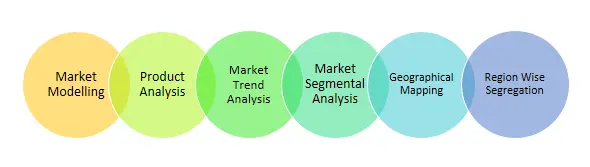
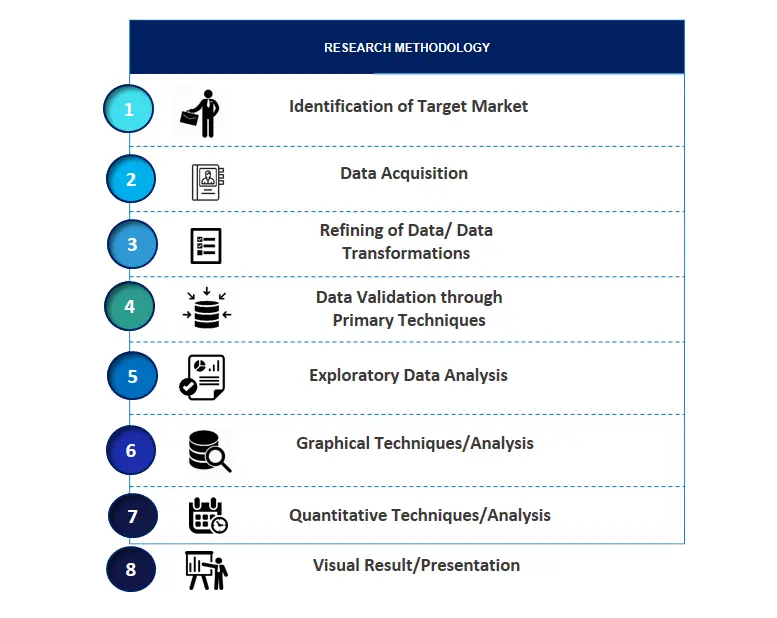
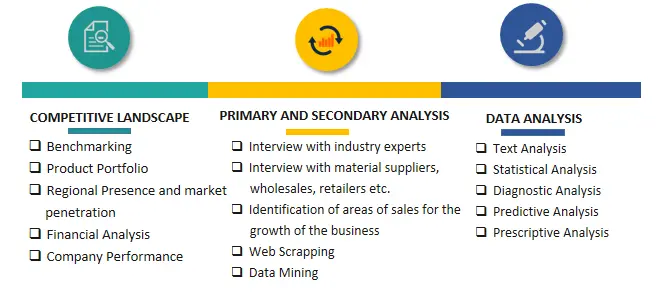
SPER Market Research’s methodology uses great emphasis on primary research to ensure that the market intelligence insights are up to date, reliable and accurate. Primary interviews are done with players involved in each phase of a supply chain to analyze the market forecasting. The secondary research method is used to help you fully understand how the future markets and the spending patterns look likes.

The report is based on in-depth qualitative and quantitative analysis of the Product Market. The quantitative analysis involves the application of various projection and sampling techniques. The qualitative analysis involves primary interviews, surveys, and vendor briefings.  The data gathered as a result of these processes are validated through experts opinion. Our research methodology entails an ideal mixture of primary and secondary initiatives.
SPER-Methodology-1

SPER-Methodology-2

SPER-Methodology-3


Frequently Asked Questions About This Report
PLACE AN ORDER
  • 15 % off
     
    $ 3250
  • 20 % off
             
    $ 4250
  • 25 % off
         
    $ 6250
Pre-Purchase Inquiry
SEND AN INQUIRY
NEED CUSTOMIZATION?
Request Customization
CALL OR EMAIL US
US:
India:
Email:
100% Secure Payment

SPER American Express
SPER VISA
SPER Master Card
SPER Mestro
SPER Paypal
SPER CCAvenues

Have a glance of the Report

  Download Free Sample

Looking for Customization?

 Customization Request

Have a Question?

 Reach Our Analysis Team

COVID-19 impact analysis?

 Request Analysis
Thought Leadership

Trusted by Industry Leaders

Our data-driven insights have influenced the strategy of 200+ reputed companies across the globe.

SPER-Astellas Pharma
SPER-Microsoft
SPER-EY
SPER-McKinsey
SPER-Bain
SPER-Max-Healthcare
SPER-DHL
SPER-IQVIA
SPER-Mitsubishi Logistics
SPER-PACCOR
SPER-Macmillan Education
SPER-Kankar IMRB
SPER-ITA
SPER-PWC
SPER-SAPTCA
SPER-Straumann
SPER-Danaher
SPER-AandM
SPER-MENARINI Silicon Biosystems
SPER-IPSOS
SPER-Heineken
HIPPA Compliant
GDPR Certified
ISO 27001
Peer Reviewed
Get Started Today

Your Competitive Advantage in
Pharmaceutical & Medical Technology
Markets

Join industry leaders leveraging AI-powered intelligence to make confident, data-driven decisions that accelerate breakthrough treatments and technologies to market.

No Credit Card Required
15-Minute Demo
Expert Guidance