
Global Low Rolling Resistance Tire Market Report
Global Low Rolling Resistance Tire Market Growth, Size, Trends Analysis- By Vehicle, By Propulsion, By Material, By Sales Channel, By End Use – Regional Outlook, Competitive Strategies and Segment Forecast to 2034
| Published: Jan-2026 | Report ID: AMIN2610 | Pages: 1 - 127 | Formats*: |
| Category : Automotive & Transportation | |||
- In April 2025, Bridgestone Corporation blazoned the release of its coming- generation Ecopia tire series featuring advanced silica composites and personal tread design optimized for electric vehicles (EVs). The new line offers up to 7 bettered rolling effectiveness and enhanced wet traction, aligning with global sustainability pretensions. Bridgestone emphasized its commitment to decarbonization and EV range optimization by integrating LRR technology acclimatized for civic and long- distance electric mobility.
- In March 2025, Michelin introduced its e. Primacy 2 tire across European and Asian requests. Designed specifically for mongrel and EV models, the tire boasts a 9 reduction in rolling resistance and incorporates bio-sourced and reclaimed accoutrements. This invention reflects Michelin’s charge to produce 100 sustainable tires by 2050 and highlights its leadership in green tire technology that supports both energy effectiveness and extended EV range.
- In February 2025, Continental AG expanded its Eco Contact 7 line to include a new variant finagled for high- performance EVs and plug- in mongrels. The upgraded model features adaptive tread stiffness and temperature- resistant rubber composites that maintain low rolling resistance indeed under aggressive driving conditions. Continental emphasized the part of smart accoutrements in reducing energy loss and supporting unborn mobility demands.
- In January 2025, The Goodyear Tire & Rubber Company unveiled its rearmost low rolling resistance invention the Electric Drive 2 series. Designed for coming- word EVs, the tires offer optimized aerodynamics, ultra-low rolling resistance, and a noise- reducing tread profile. Goodyear’s new release underscores its strategic focus on supporting sustainable transport and extending battery life in EVs through tire invention.
- In December 2024, Pirelli & C. S.p.A. launched the Cinturato Verde EV, a low rolling resistance tire specifically finagled for civic electric buses. The tire integrates Pirelli’s handpick technology, which enhances range and lift comfort while reducing energy dispersion. With this launch, Pirelli is targeting eco-conscious consumers in metropolitan areas and contributing to the broader transition toward zero- emigration mobility.
- In November 2024, Hankook Tire & Technology Co., Ltd. debuted its Kinergy AS X LRR tire line in North America, emphasizing each- season performance combined with energy- saving parcels. The tire’s advanced tread emulsion reduces rolling resistance by 12 compared to former models, helping motorists’ lower energy consumption and CO2 emigrations. Hankook’s development supports its global ESG roadmap and EV- concentrated product strategy.
- In October 2024, Sumitomo Rubber diligence, Ltd. launched its ENASAVE Premium tire in Japan and Southeast Asia. The tire features a groundbreaking polymer structure that minimizes heat buildup, significantly lowering rolling resistance while maintaining grip and continuity. This invention reflects Sumitomo’s commitment to green mobility results and its vision to produce further resource-effective tires for electric and cold-blooded vehicles.
| Report Metric | Details |
|---|---|
| Market size available for years | 2021-2034 |
| Base year considered | 2024 |
| Forecast period | 2025-2034 |
| Segments covered | By Vehicle, By Propulsion, By Material, By Sales Channel, By End Use |
| Regions covered | North America, Latin America, Asia-Pacific, Europe, and Middle East & Africa |
| Companies Covered | Apollo, Bridgestone, Cheng Shin Rubber Industry, Continental, Hankook Tire & Technology, Michelin, Pirelli & C. S., Sumitomo Rubber Industries, The Goodyear Tire & Rubber Company, Yokohama Rubber |
- Global Low Rolling Resistance Tire Market Size (FY’2021-FY’2034)
- Overview of Global Cloud Telecommunications AI Market
- Segmentation of Global Low Rolling Resistance Tire Market by Vehicle (Passenger cars, Commercial vehicles)
- Segmentation of Global Low Rolling Resistance Tire Market by Propulsion (Gasoline, Diesel, All-Electric, PHEV, HEV, FCEV)
- Segmentation of Global Low Rolling Resistance Tire Market by Material (Rubber-based, Silica-based, Hybrid compounds, Nano materials)
- Segmentation of Global Low Rolling Resistance Tire Market by Sales Channel (OEM, Aftermarket)
- Segmentation of Global Low Rolling Resistance Tire Market by End Use (Personal use, Commercial fleets, Government/municipal transport, Logistics and delivery services)
- Statistical Snap of Global Low Rolling Resistance Tire Market
- Expansion Analysis of Global Low Rolling Resistance Tire Market
- Problems and Obstacles in Global Low Rolling Resistance Tier Market
- Competitive Landscape in the Global Low Rolling Resistance Tier Market
- Details on Current Investment in Global Low Rolling Resistance Tier Market
- Competitive Analysis of Global Low Rolling Resistance Tier Market
- Prominent Players in the Global Low Rolling Resistance Tier Market
- SWOT Analysis of Global Low Rolling Resistance Tier Market
- Global Low Rolling Resistance Tire Market Future Outlook and Projections (FY’2025-FY’2034)
- Recommendations from Analyst
1.1. Scope of the report1.2. Market segment analysis
2.1. Research data source
2.1.1. Secondary Data2.1.2. Primary Data2.1.3. SPER’s internal database2.1.4. Premium insight from KOL’s
2.2. Market size estimation
2.2.1. Top-down and Bottom-up approach
2.3. Data triangulation
4.1. Driver, Restraint, Opportunity and Challenges analysis
4.1.1. Drivers4.1.2. Restraints4.1.3. Opportunities4.1.4. Challenges
5.1. SWOT Analysis
5.1.1. Strengths5.1.2. Weaknesses5.1.3. Opportunities5.1.4. Threats
5.2. PESTEL Analysis
5.2.1. Political Landscape5.2.2. Economic Landscape5.2.3. Social Landscape5.2.4. Technological Landscape5.2.5. Environmental Landscape5.2.6. Legal Landscape
5.3. PORTER’s Five Forces
5.3.1. Bargaining power of suppliers5.3.2. Bargaining power of buyers5.3.3. Threat of Substitute5.3.4. Threat of new entrant5.3.5. Competitive rivalry
5.4. Heat Map Analysis
6.1. Global Low Rolling Resistance Tire Market Manufacturing Base Distribution, Sales Area, Product Type6.2. Mergers & Acquisitions, Partnerships, Product Launch, and Collaboration in Global Low Rolling Resistance Tire Market
7.1. Passenger cars
7.1.1. Sedans7.1.2. Hatchbacks7.1.3. SUV
7.2. Commercial vehicles
7.2.1. Light duty
7.2.2. Medium duty7.2.3. Heavy duty
8.1. Gasoline8.2. Diesel8.3. All-Electric8.4. PHEV8.5. HEV8.6. FCEV
9.1. Rubber-based9.2. Silica-based9.3. Hybrid compounds9.4. Nano materials
10.1. OEM10.2. Aftermarket
11.1. Personal use11.2. Commercial fleets11.3. Government/municipal transport11.4. Logistics and delivery services
12.1. Global Low Rolling Resistance Tire Market Size and Market Share
13.1. Asia-Pacific
13.1.1. Australia13.1.2. China13.1.3. India13.1.4. Japan13.1.5. South Korea13.1.6. Rest of Asia-Pacific
13.2. Europe
13.2.1. France13.2.2. Germany13.2.3. Italy13.2.4. Spain13.2.5. United Kingdom13.2.6. Rest of Europe
13.3. Middle East and Africa
13.3.1. Kingdom of Saudi Arabia13.3.2. United Arab Emirates13.3.3. Qatar13.3.4. South Africa13.3.5. Egypt13.3.6. Morocco13.3.7. Nigeria13.3.8. Rest of Middle-East and Africa
13.4. North America
13.4.1. Canada13.4.2. Mexico13.4.3. United States
13.5. Latin America
13.5.1. Argentina13.5.2. Brazil13.5.3. Rest of Latin America
14.1. Apollo
14.1.1. Company details14.1.2. Financial outlook14.1.3. Product summary14.1.4. Recent developments
14.2. Bridgestone
14.2.1. Company details14.2.2. Financial outlook14.2.3. Product summary14.2.4. Recent developments
14.3. Cheng Shin Rubber Industry
14.3.1. Company details14.3.2. Financial outlook14.3.3. Product summary14.3.4. Recent developments
14.4. Continental
14.4.1. Company details14.4.2. Financial outlook14.4.3. Product summary14.4.4. Recent developments
14.5. Hankook Tire & Technology
14.5.1. Company details14.5.2. Financial outlook14.5.3. Product summary14.5.4. Recent developments
14.6. Michelin
14.6.1. Company details14.6.2. Financial outlook14.6.3. Product summary14.6.4. Recent developments
14.7. Pirelli & C. S.
14.7.1. Company details14.7.2. Financial outlook14.7.3. Product summary14.7.4. Recent developments
14.8. Sumitomo Rubber Industries
14.8.1. Company details14.8.2. Financial outlook14.8.3.Product summary14.8.4. Recent developments
14.9. The Goodyear Tire & Rubber Company
14.9.1. Company details14.9.2. Financial outlook14.9.3. Product summary14.9.4. Recent developments
14.10. Yokohama Rubber
14.10.1. Company details14.10.2. Financial outlook14.10.3. Product summary14.10.4. Recent developments
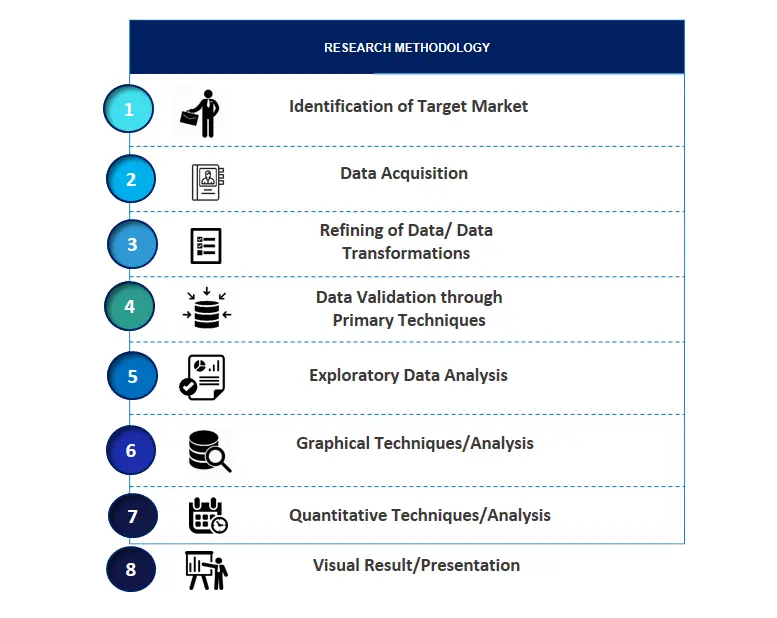
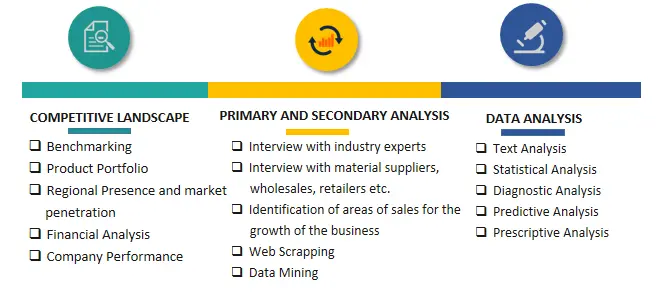
SPER Market Research’s methodology uses great emphasis on primary research to ensure that the market intelligence insights are up to date, reliable and accurate. Primary interviews are done with players involved in each phase of a supply chain to analyze the market forecasting. The secondary research method is used to help you fully understand how the future markets and the spending patterns look likes.
The report is based on in-depth qualitative and quantitative analysis of the Product Market. The quantitative analysis involves the application of various projection and sampling techniques. The qualitative analysis involves primary interviews, surveys, and vendor briefings. The data gathered as a result of these processes are validated through experts opinion. Our research methodology entails an ideal mixture of primary and secondary initiatives.
Frequently Asked Questions About This Report
PLACE AN ORDER
Year End Discount
Sample Report
Pre-Purchase Inquiry
NEED CUSTOMIZATION?
Request CustomizationCALL OR EMAIL US
100% Secure Payment