Global Equestrian Equipment Market Growth and Trends

Global Equestrian Equipment Market Growth, Size, Trends Analysis- By Equipment Type, By Price, By Gender, By Consumer Group, By Distribution Channel – Regional Outlook, Competitive Strategies and Segment Forecast to 2034

Published: Jan-2026 Report ID: FMCG2601 Pages: 1 - 210 Formats*:     
Category : Consumer & Retail
According to SPER Market Research, the Global Equestrian Equipment Market is estimated to reach USD 18.72 billion by 2034 with a CAGR 4.55%.

Introduction and Overview
The report includes an in-depth analysis of the Global Equestrian Equipment Market, including market size and trends, product mix, Applications, and supplier analysis.

The global Equestrian Equipment Market was valued at USD 12 billion in 2024 and is expected to grow at a CAGR of about 4.55% from 2025 to 2034. The market is witnessing steady growth due to rising participation in recreational and competitive horse-riding activities across developed and emerging regions. Increasing disposable income among urban populations has encouraged higher spending on premium riding gear and horse care products. Growing awareness of rider and horse safety is driving demand for protective equipment such as helmets, boots, body protectors, and saddles. Moreover, the continued popularity of equestrian sports, supported by their inclusion in international events such as the Olympic Games, is enhancing global visibility, encouraging investments in training facilities, clubs, and high-quality equestrian equipment worldwide.

By Equipment Type: 
By equipment type, rider equipment accounts for a larger portion of overall market revenue compared with equine equipment. Products such as helmets, riding boots, jackets, gloves, saddle pads, and safety vests see consistent demand due to rising awareness of rider protection and comfort. Regulatory standards and safety certifications further support sales of protective riding gear. Meanwhile, equine equipment including saddles, bridles, halters, stirrups, and horseshoes continues to witness steady demand driven by horse training, competitions, and daily care requirements. However, higher replacement frequency and wider product usage place rider equipment in a stronger market position.

By Price: 
In terms of price segmentation, the medium-priced segment captures the largest share of demand across the equestrian equipment market. This category appeals to both recreational and semi-professional riders seeking durable, safe, and reliable products without the premium pricing of high-end brands. Medium-priced equipment balances quality, comfort, and performance, making it suitable for regular riding activities. The low-price segment is mainly preferred by beginners and occasional riders, while the high-price segment caters to professional athletes and elite competitions. Wider consumer acceptance and affordability make the medium-price range the most preferred choice.

By Gender: 
Based on gender, the male segment accounts for a greater share of equestrian equipment consumption. Higher participation of men in professional riding disciplines, competitive events, and training activities contributes to stronger demand for specialized gear and protective equipment. Male riders also tend to invest more in high-performance saddles, helmets, and riding apparel. The female segment, however, is expanding steadily due to increasing participation in leisure riding, equestrian sports, and fashion-oriented riding apparel. Growing inclusivity and targeted product designs for women are supporting balanced growth, though male riders currently represent a larger market share.

By Consumer Group: 
By consumer group, individual buyers represent a larger portion of the equestrian equipment market compared with institutional purchasers. Rising interest in recreational horse riding, personal ownership of horses, and participation in amateur competitions drive individual spending on riding gear and accessories. Individual consumers frequently purchase helmets, boots, apparel, and horse care products for personal use. Institutional buyers such as riding schools, clubs, and training academies contribute consistent but comparatively lower volumes, as their purchases are often bulk-based and less frequent. Increasing personal engagement in equestrian activities strengthens the position of individual consumers.

By Distribution Channel: 
By distribution channel, offline channels account for a higher share of equestrian equipment sales than online platforms. Specialty tack shops, sporting goods stores, and authorized retailers remain preferred purchasing points due to the need for proper fitting, quality inspection, and expert guidance. Many riders prefer to physically assess saddles, helmets, and boots before purchase. Online channels are gaining traction, supported by wider product availability, convenience, and competitive pricing. However, trust in in-store expertise, customization options, and after-sales services continues to support stronger revenue generation through offline distribution channels.

Regional Insights: 
North America holds a significant portion of the global equestrian equipment market, led by the U.S. and Canada, supported by strong recreational riding culture and established equestrian sports. Europe also contributes a major share, particularly in Germany, the UK, France, Italy, Spain, and other European countries with rich equestrian traditions and widespread participation. The Asia Pacific region is experiencing rapid growth, driven by rising disposable incomes and increasing interest in horse riding activities in China, Japan, India, South Korea, Australia, and other APAC nations. Latin America, including Brazil, Mexico, and other countries, shows moderate expansion. In the Middle East and Africa (Saudi Arabia, UAE, South Africa, and others), niche markets are emerging, fueled by luxury sporting events and growing equestrian communities worldwide.


Market Competitive Landscape:
The Equestrian Equipment Market is highly consolidated. Some of the market key players are Ariat International, Cavallo GmbH, Charles Owen, Devoucoux, Dublin Clothing, Equine Couture, Hermes, HKM Sports Equipment GmbH, Horse Health, Horseware Ireland, Kerrits Equestrian Apparel, Premier Equestrian, Troxel Helmets, WeatherBeeta, Weaver Leather

Recent Developments:
  • In July 2024, Samshield, celebrated for its pioneering approach to steed riding helmets, unveiled its rearmost invention the helmets 2.0. After four times of devoted exploration, these state- of- the- art helmets promise unequalled comfort and superior safety.
  • In March 2024, Evoke, a prominent name in the equestrian world, rolled out a series of advanced helmets and a corresponding relief program, backed by a USD 3 million investment. This move seeks to elevate both the safety and style of riders through slice- edge, tech- invested designs.
  • In January 2023, Ariat International, Inc. teamed up with American rodeo champion Trevor Brazile to launch the grim tomorrow collection. This new line features thrills designed for competition, riding, and everyday wear and tear, signifying an expansion of Ariat's product immolations. The collaboration aims to bring together moxie and invention, feeding to the different requirements of riders across different disciplines and buttressing Ariat's commitment to furnishing high- quality equestrian gear.

Scope of the report:
Report MetricDetails
Market size available for years2021-2034
Base year considered2024
Forecast period2025-2034
Segments coveredBy Equipment Type, By Price, By Gender, By Consumer Group, By Distribution Channel
Regions coveredNorth America, Latin America, Asia-Pacific, Europe, and Middle East & Africa
Companies CoveredAriat International, Cavallo GmbH, Charles Owen, Devoucoux, Dublin Clothing, Equine Couture, Hermes, HKM Sports Equipment GmbH, Horse Health, Horseware Ireland, Kerrits Equestrian Apparel, Premier Equestrian, Troxel Helmets, WeatherBeeta, Weaver Leather


Key Topics Covered in the Report
  • Global Equestrian Equipment Market Size (FY’2021-FY’2034)
  • Overview of Global Cloud Telecommunications AI Market
  • Segmentation of Global Equestrian Equipment Market by Equipment Type (Rider Equipment, Equine Equipment)
  • Segmentation of Global Equestrian Equipment Market by Price (Low, Medium, High)
  • Segmentation of Global Equestrian Equipment Market by Gender (Male, Female)
  • Segmentation of Global Equestrian Equipment Market by Consumer Group (Individual, Institutional)
  • Segmentation of Global Equestrian Equipment Market by Distribution Channel (Online channels, Offline channels)
  • Statistical Snap of Global Equestrian Equipment Market
  • Expansion Analysis of Global Equestrian Equipment Market
  • Problems and Obstacles in Global Equestrian Equipment Market
  • Competitive Landscape in the Global Equestrian Equipment Market
  • Details on Current Investment in Global Equestrian Equipment Market
  • Competitive Analysis of Global Equestrian Equipment Market
  • Prominent Players in the Global Equestrian Equipment Market
  • SWOT Analysis of Global Equestrian Equipment Market
  • Global Equestrian Equipment Market Future Outlook and Projections (FY’2025-FY’2034)
  • Recommendations from Analyst
1.Introduction
1.1.Scope of the report
1.2.Market segment analysis 

2.Research Methodology
2.1.Research data source
2.1.1.Secondary Data
2.1.2.Primary Data
2.1.3.SPER’s internal database
2.1.4.Premium insight from KOL’s
2.2.Market size estimation
2.2.1.Top-down and Bottom-up approach
2.3.Data triangulation

3.Executive Summary

4.Market Dynamics
4.1.Driver, Restraint, Opportunity and Challenges analysis
4.1.1.Drivers
4.1.2.Restraints
4.1.3.Opportunities
4.1.4.Challenges

5.Market variable and outlook
5.1.SWOT Analysis
5.1.1.Strengths
5.1.2.Weaknesses
5.1.3.Opportunities
5.1.4.Threats
5.2.PESTEL Analysis
5.2.1.Political Landscape
5.2.2.Economic Landscape
5.2.3.Social Landscape
5.2.4.Technological Landscape
5.2.5.Environmental Landscape
5.2.6.Legal Landscape
5.3.PORTER’s Five Forces 
5.3.1.Bargaining power of suppliers
5.3.2.Bargaining power of buyers
5.3.3.Threat of Substitute
5.3.4.Threat of new entrant
5.3.5.Competitive rivalry
5.4.Heat Map Analysis

6.Competitive Landscape
6.1.Global Equestrian Equipment Market Manufacturing Base Distribution, Sales Area, Product Type 
6.2.Mergers & Acquisitions, Partnerships, Product Launch, and Collaboration in Global Equestrian Equipment Market

7.Global Equestrian Equipment Market, By Equipment Type, (USD Million) 2021-2034 
7.1.Rider Equipment
7.1.1.Helmets
7.1.2.Riding boots
7.1.3.Saddle pads
7.1.4.Jackets
7.1.5.Gloves
7.1.6.Whips
7.1.7.Safety vests
7.1.8.Others (breeches, accessories, etc.)
7.2. Equine Equipment
7.2.1.Saddles
7.2.2.Bridles
7.2.3.Halters
7.2.4.Stirrup
7.2.5.Horseshoes and protection boots
7.2.6.Others (girths, accessories, etc.)

8.Global Equestrian Equipment Market, By Prize, (USD Million) 2021-2034 
8.1.Low
8.2.Medium
8.3.High

9.Global Equestrian Equipment Market, By Gender, (USD Million) 2021-2034 
9.1.Male
9.2.Female

10.Global Equestrian Equipment Market, By Consumer Group, (USD Million) 2021-2034 
10.1.Individual
10.2.Institutional

11.Global Equestrian Equipment Market, By Distribution Channel, (USD Million) 2021-2034 
11.1.Online channels
11.2.Offline channels

12.Global Equestrian Equipment Market, (USD Million) 2021-2034 
12.1.Global Equestrian Equipment Market Size and Market Share

13.Global Equestrian Equipment Market, By Region, 2021-2034 (USD Million)
13.1.Asia-Pacific
13.1.1.Australia
13.1.2.China
13.1.3.India
13.1.4.Japan
13.1.5.South Korea
13.1.6.Rest of Asia-Pacific
13.2.Europe
13.2.1.France
13.2.2.Germany
13.2.3.Italy
13.2.4.Spain
13.2.5.United Kingdom
13.2.6.Rest of Europe
13.3.Middle East and Africa
13.3.1.Kingdom of Saudi Arabia 
13.3.2.United Arab Emirates
13.3.3.Qatar
13.3.4.South Africa
13.3.5.Egypt
13.3.6.Morocco
13.3.7.Nigeria
13.3.8.Rest of Middle-East and Africa
13.4.North America
13.4.1.Canada
13.4.2.Mexico
13.4.3.United States
13.5.Latin America
13.5.1.Argentina
13.5.2.Brazil
13.5.3.Rest of Latin America 

14.Company Profile
14.1.Ariat International
14.1.1.Company details
14.1.2.Financial outlook
14.1.3.Product summary 
14.1.4.Recent developments
14.2.Cavallo GmbH
14.2.1.Company details
14.2.2.Financial outlook
14.2.3.Product summary 
14.2.4.Recent developments
14.3.Charles Owen
14.3.1.Company details
14.3.2.Financial outlook
14.3.3.Product summary 
14.3.4.Recent developments
14.4.Devoucoux
14.4.1.Company details
14.4.2.Financial outlook
14.4.3.Product summary 
14.4.4.Recent developments
14.5.Dublin Clothing
14.5.1.Company details
14.5.2.Financial outlook
14.5.3.Product summary 
14.5.4.Recent developments
14.6.Equine Couture
14.6.1.Company details
14.6.2.Financial outlook
14.6.3.Product summary 
14.6.4.Recent developments
14.7.Hermes
14.7.1.Company details
14.7.2.Financial outlook
14.7.3.Product summary 
14.7.4.Recent developments
14.8.HKM Sports Equipment GmbH
14.8.1.Company details
14.8.2.Financial outlook
14.8.3.Product summary 
14.8.4.Recent developments
14.9.Horse Health
14.9.1.Company details
14.9.2.Financial outlook
14.9.3.Product summary 
14.9.4.Recent developments
14.10.Horseware Ireland
14.10.1.Company details
14.10.2.Financial outlook
14.10.3.Product summary 
14.10.4.Recent developments
14.11.Kerrits Equestrian Apparel
14.11.1.Company details
14.11.2.Financial outlook
14.11.3.Product summary 
14.11.4.Recent developments
14.12.Premier Equestrian
14.12.1.Company details
14.12.2.Financial outlook
14.12.3.Product summary 
14.12.4.Recent developments
14.13.Troxel Helmets
14.13.1.Company details
14.13.2.Financial outlook
14.13.3.Product summary 
14.13.4.Recent developments
14.14. WeatherBeeta
14.14.1. Company details
14.14.2. Financial outlook
14.14.3. Product summary 
14.14.4. Recent developments
14.15. Weaver Leather
14.15.1. Company details
14.15.2. Financial outlook
14.15.3. Product summary 
14.15.4. Recent developments

15. Conclusion

16. List of Abbreviations

17. Reference Links

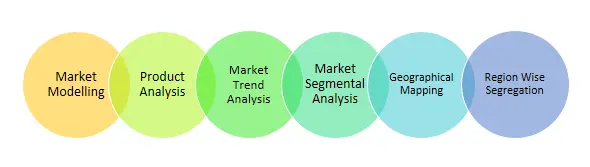
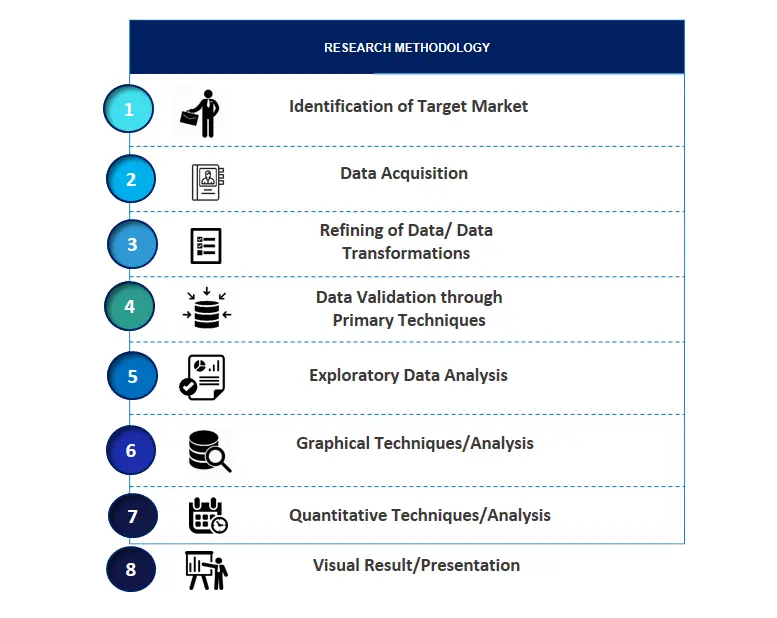
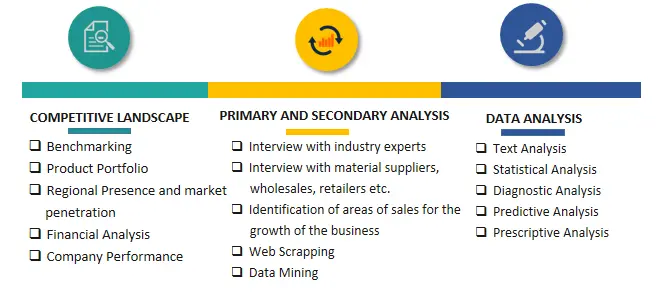
SPER Market Research’s methodology uses great emphasis on primary research to ensure that the market intelligence insights are up to date, reliable and accurate. Primary interviews are done with players involved in each phase of a supply chain to analyze the market forecasting. The secondary research method is used to help you fully understand how the future markets and the spending patterns look likes.

The report is based on in-depth qualitative and quantitative analysis of the Product Market. The quantitative analysis involves the application of various projection and sampling techniques. The qualitative analysis involves primary interviews, surveys, and vendor briefings.  The data gathered as a result of these processes are validated through experts opinion. Our research methodology entails an ideal mixture of primary and secondary initiatives.
SPER-Methodology-1

SPER-Methodology-2

SPER-Methodology-3


Frequently Asked Questions About This Report
The Global AI in Computer Vision Market is expected to grow at a CAGR of around 19.75% during this period.
Advancements in AI, deep learning, and image processing, along with rising automation demand across industries, are fueling growth.
The market was valued at approximately USD 14.1 billion in 2024 and is projected to grow significantly through 2034.
PLACE AN ORDER
  • 15 % off
     
    $ 4250
  • 20 % off
             
    $ 5650
  • 25 % off
         
    $ 7450
Pre-Purchase Inquiry
SEND AN INQUIRY
NEED CUSTOMIZATION?
Request Customization
CALL OR EMAIL US
US:
India:
Email:
100% Secure Payment

SPER American Express
SPER VISA
SPER Master Card
SPER Mestro
SPER Paypal
SPER CCAvenues
Related Reports

Global Rechargeable Light Market Growth, Size, Trends Analysis-By Type, By Product Type, By Power Source, By Price, By End Use, By Distribution Channel– Regional Outlook, Competitive Strategies and Segment Forecast to 2035


Global Connected TV Market - By Screen Size, By Technology, By Screen Type, By Resolution, By End Use and By Distribution Channel - Regional Outlook, Competitive Strategies and Segment Forecast to 2034


Global Smartwatch Market - By Product Type, By Operating System, By Display Type, By Price Range, By Application, By End-use and By Distribution Channel - Regional Outlook, Competitive Strategies and Segment Forecast to 2034


Global Mouth Freshener Market Growth, Size, Trends Analysis- By Product Type, By Category, By Ingredient, By Price Range, By Distribution Channel – Regional Outlook, Competitive Strategies and Segment Forecast to 2034


Canada Air Purifier Market Growth, Size, Trends Analysis-By Technology, By Product Type, By Coverage Area, By Price Range, By End User, By Distribution Channel Regional Outlook, Competitive Strategies and Segment Forecast to 2034


Europe Pet Coat Care Market Growth, Size, Trends Analysis- By Product, By Size, By Delivery, By Type/Ingredient, By Pet Type, By End Use, By Distribution Channel – Regional Outlook, Competitive Strategies and Segment Forecast to 2034


Global Barware Market Growth, Size, Trends Analysis- By Product Type, By Material, By Price, By End Use, By Distribution Channel – Regional Outlook, Competitive Strategies and Segment Forecast to 2034


Have a glance of the Report

  Download Free Sample

Looking for Customization?

 Customization Request

Have a Question?

 Reach Our Analysis Team

COVID-19 impact analysis?

 Request Analysis
Thought Leadership

Trusted by Industry Leaders

Our data-driven insights have influenced the strategy of 200+ reputed companies across the globe.

SPER-Astellas Pharma
SPER-Microsoft
SPER-EY
SPER-McKinsey
SPER-Bain
SPER-Max-Healthcare
SPER-DHL
SPER-IQVIA
SPER-Mitsubishi Logistics
SPER-PACCOR
SPER-Macmillan Education
SPER-Kankar IMRB
SPER-ITA
SPER-PWC
SPER-SAPTCA
SPER-Straumann
SPER-Danaher
SPER-AandM
SPER-MENARINI Silicon Biosystems
SPER-IPSOS
SPER-Heineken
HIPPA Compliant
GDPR Certified
ISO 27001
Peer Reviewed
Get Started Today

Your Competitive Advantage in
Pharmaceutical & Medical Technology
Markets

Join industry leaders leveraging AI-powered intelligence to make confident, data-driven decisions that accelerate breakthrough treatments and technologies to market.

No Credit Card Required
15-Minute Demo
Expert Guidance