Veterinary Diagnostics for Canine & Feline
Primary Research Insights (US, EU & UK | n = 100)
veterinary diagnostics for companion animals are evolving rapidly, increasingly powered by veterinary intelligence platforms that enable faster and more accurate clinical decisions, driven by rising pet ownership, demand for faster clinical decisions, and increasing expectations from pet owners. A primary quantitative study conducted across the US, EU, and UK with 100 veterinary professionals highlights how veterinary diagnostics for companion animals are currently used, where gaps exist, and what the future holds—particularly for canine and feline care.Key Takeaways from the Research
- In-Clinic Diagnostics Dominate: In-Clinic Diagnostics Dominate: Over half of respondents rely primarily on in-house diagnostic analyzers used in veterinary diagnostics for companion animals, citing faster turnaround time and improved clinical confidence. Reference labs remain important for specialized testing but are secondary for routine cases.
These findings align with trends observed in veterinary digitalization in animal health
- Core Tests Drive Volume: Blood chemistry, hematology, and urinalysis remain the most frequently used diagnostic categories in companion animal diagnostics. Advanced diagnostics such as PCR and molecular testing are still underpenetrated but show strong growth intent.
Similar patterns are also seen in point-of-care diagnostics adoption in veterinary practice
- Accuracy Over Cost: When selecting solutions for veterinary diagnostics for companion animals, accuracy and reliability ranked highest, particularly when supported by AI-driven animal health analytics platforms—above cost per test. Clinics are willing to pay more for consistent, clinically actionable results.
- Feline Diagnostics Remain Underserved: Diagnostic testing for cats presents unique challenges, including smaller sample volumes and higher stress during procedures. Veterinarians expressed a clear need for low-volume, cat-friendly solutions in companion animal diagnostics.
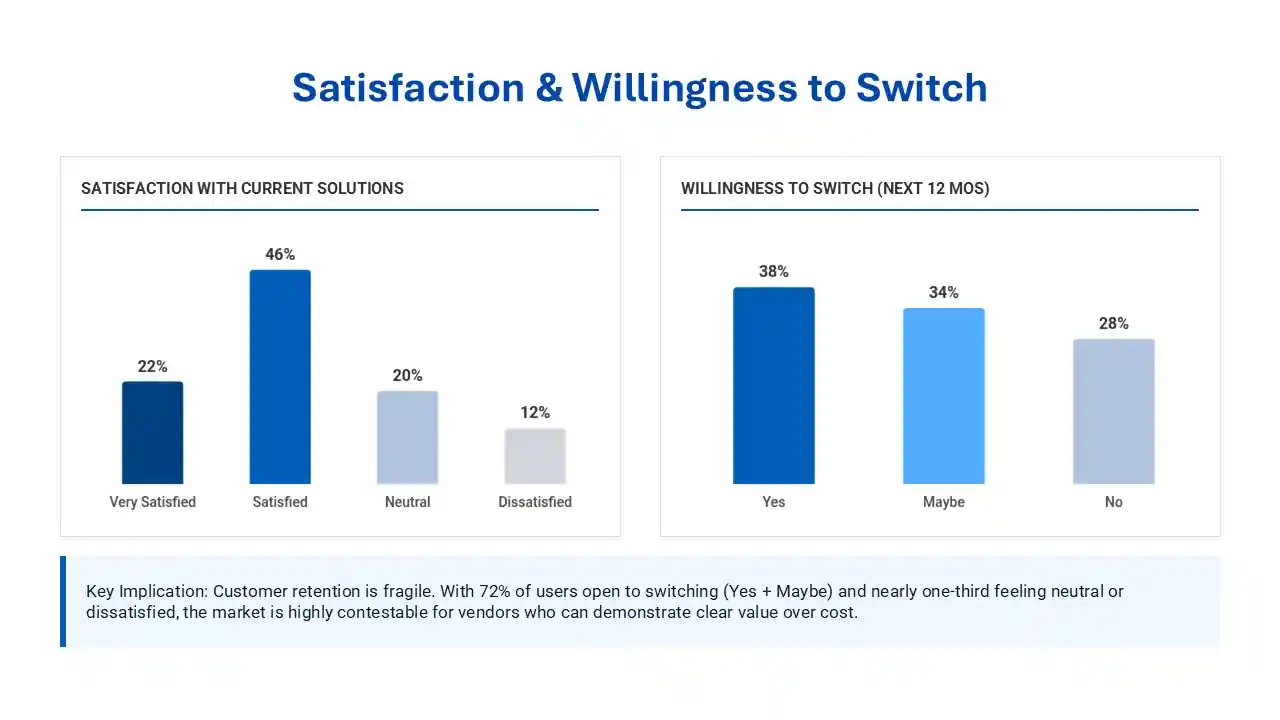
- High Willingness to Switch: More than 70% of respondents are open to switching diagnostic vendors within the next 12 months, signaling a highly contestable and innovation-driven market in veterinary diagnostics for companion animals.
- Strong Interest in Advanced Technologies: AI-enabled diagnostics, multiplex assays, and molecular testing show high adoption interest, especially when integrated with AI-powered veterinary intelligence solutions in companion animal diagnostics, constrained mainly by pricing and training requirements.