
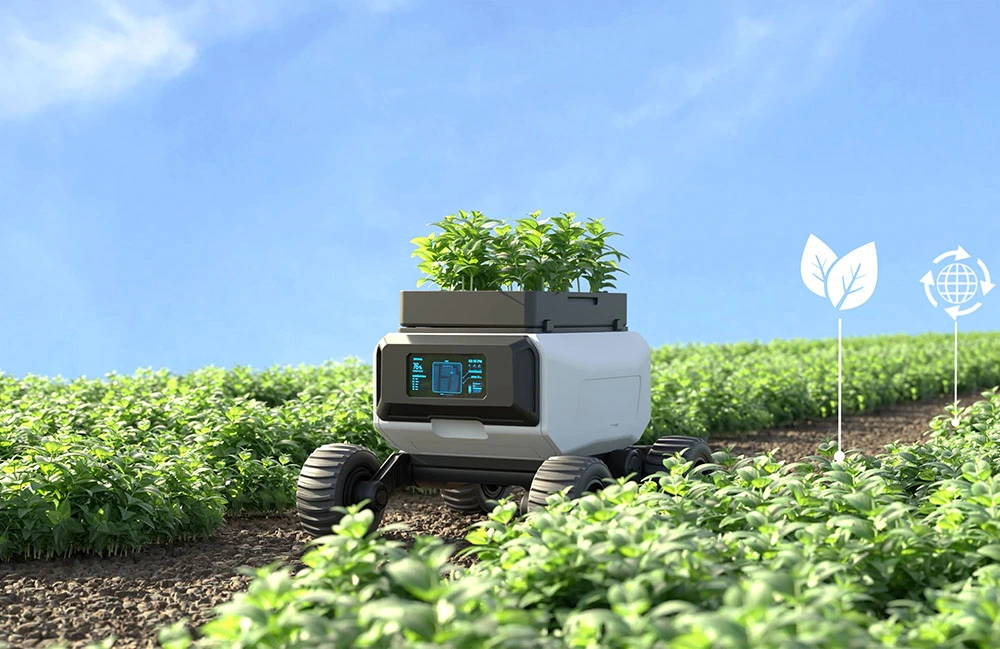
A Primary Research Study of 50 Respondents
1. Introduction
The U.S. agricultural sector is experiencing rapid transformation through the adoption of agricultural robotics, farm automation, and data-driven technologies. With the rise of precision agriculture and robotics in agriculture, farmers are improving productivity, optimizing resources, and enhancing long-term sustainability. Leading companies such as John Deere, Blue River Technology, and Trimble Inc. are developing innovative solutions that support smart farming USA initiatives This report presents insights from a primary research study involving 50 respondents, including farmers, farm managers, agronomists, and agricultural technology consultants across the United States.
2. Research Objective
The primary objectives of this research were:
- To assess the level of awareness and adoption of robotics in U.S. agriculture.
- To evaluate the perceived benefits and challenges of robotic systems.
- To measure the impact of robotics on productivity, labor, and profitability.
- To understand future investment intentions and attitudes toward automation.
3. Research Methodology
- Sample Size: 50 respondents
- Location: Multiple U.S. states (Midwest, California, Texas, Florida)
Respondent Type
| Respondent Category | Percentage |
|---|---|
| Farmers | 60% |
| Farm Managers | 20% |
| Agronomists | 10% |
| AgTech Consultants | 10% |
- Method: Structured questionnaire
4. Survey Questionnaire & Responses
Q1. Are you aware of robotics technologies used in agriculture?
| Response | Respondents | Percentage |
|---|---|---|
| Yes | 46 | 92% |
| No | 4 | 8% |
Outcome: Awareness level is extremely high, indicating widespread exposure to agricultural robotics technologies.
Q2. Have you implemented any robotic solutions on your farm?
| Response | Respondents | Percentage |
|---|---|---|
| Yes | 32 | 64% |
| No | 18 | 36% |
Outcome: Adoption rate is significant, particularly among medium and large-scale farms.
Q3. Which robotic technologies are you using? (Multiple Response)
| Technology | % of Users |
|---|---|
| Autonomous Tractors | 40% |
| Drones | 70% |
| Robotic Harvesters | 30% |
| Automated Irrigation Systems | 50% |
Outcome: Drones are the most commonly adopted technology due to lower cost and ease of deployment compared to heavy robotic machinery.
Q4. What motivated you to adopt robotics?
| Factor | Percentage |
|---|---|
| Increase productivity | 74% |
| Labor shortage | 68% |
| Reduce operational cost | 60% |
| Improve crop quality | 48% |
Outcome: Productivity improvement is the strongest driver, followed closely by labor shortages.
Q5. Has robotics improved farm productivity?
| Response | Percentage |
|---|---|
| Significantly Improved | 58% |
| Moderately Improved | 34% |
| No Change | 8% |
Outcome: 92% reported noticeable productivity improvements after adopting robotics.
Q6. Did robotics reduce your labor dependency?
| Response | Percentage |
|---|---|
| Yes | 72% |
| No | 28% |
Outcome: Robotics effectively addresses labor shortages, a major issue in U.S. agriculture.
Q7. What challenges did you face during implementation?
| Challenge | Percentage |
|---|---|
| High initial investment | 76% |
| Technical training required | 52% |
| Maintenance cost | 44% |
| Connectivity issues | 30% |
Outcome: Capital investment is the biggest barrier to adoption.
Q8. Has robotics improved cost efficiency in the long run?
| Response | Percentage |
|---|---|
| Yes | 66% |
| No | 34% |
Outcome: The majority believe long-term return on investment justifies the initial expenditure.
Q9. Are you planning to increase investment in robotics within the next 5 years?
| Response | Percentage |
|---|---|
| Yes | 70% |
| No | 10% |
| Unsure | 20% |
Outcome: Strong growth potential is expected in agricultural robotics adoption.
Q10. Overall, how satisfied are you with robotics in agriculture?
| Response | Percentage |
|---|---|
| Very Satisfied | 54% |
| Satisfied | 36% |
| Neutral | 8% |
| Dissatisfied | 2% |
Outcome: Overall satisfaction rate stands at 90%, indicating strong positive perception.
7. Conclusion
The study of 50 respondents demonstrates that robotics is reshaping the agricultural landscape in the United States through agricultural robotics and farm automation. Although high capital investment and technical training requirements present challenges, the strong satisfaction rates and productivity improvements indicate that robotics will become a standard component of modern farming operations in the coming years.
With the gradual adoption of precision agriculture and smart farming in the USA, supported by robotics in agriculture, the future of U.S. agriculture is increasingly autonomous, data-driven, and technologically advanced.