
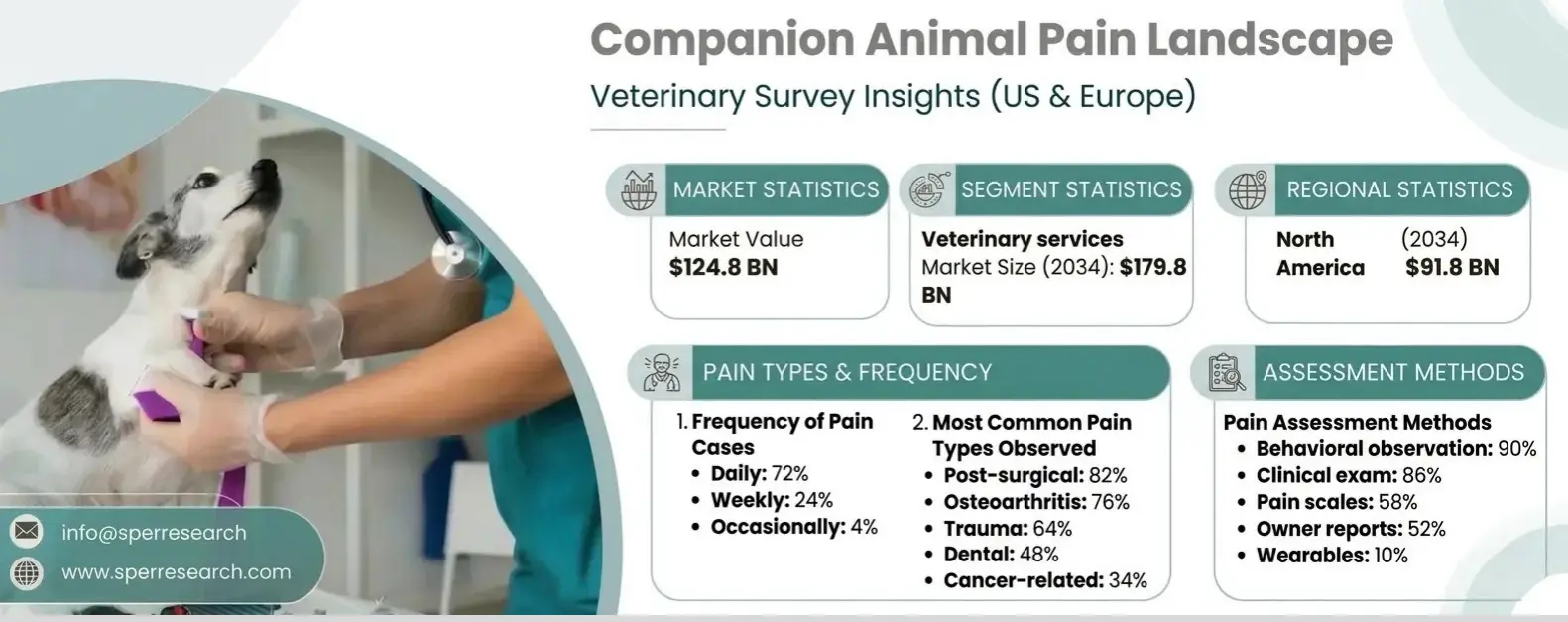
Companion Animal Pain Landscape
Veterinary Survey Insights (US & Europe)
Introduction
A comprehensive survey of 50 veterinarians across the United States and Europe highlights the growing importance of effective companion animal pain management, increasingly supported by veterinary intelligence platforms in clinical practice, particularly in dogs and cats.
Veterinarians report encountering pain cases daily, with post-surgical pain, osteoarthritis in dogs treatment, and trauma-related injuries being the most common conditions.
Despite advancements in veterinary medicine, pain assessment remains largely subjective, highlighting the need for AI-driven animal health analytics platforms to enable more objective insights and depends on behavioral observation rather than standardized veterinary pain assessment tools.
The study highlights challenges such as financial limitations, difficulty in assessing chronic pain in companion animals, drug safety concerns, and lack of species-specific therapies.
Overall, there is strong demand for innovation in veterinary pain management, especially in developing objective tools and safer treatment options.
Study Overview
Sample Size: 50 veterinarians
Geography: United States (60%), Europe (40%)
Practice Type: Small animal clinics & specialty hospitals
Focus: Companion animal pain management, assessment methods, treatment practices, and unmet needs in dogs and cats
1. Frequency of Pain Cases
| Frequency | Percentage |
|---|---|
| Daily | 72% |
| Weekly | 24% |
| Occasionally | 4% |
Insight: Pain management is a core, everyday responsibility in veterinary practice
2. Most Common Pain Types Observed
| Pain Type | Occurrence |
|---|---|
| Post-surgical | 82% |
| Osteoarthritis | 76% |
| Trauma | 64% |
| Dental | 48% |
| Cancer-related | 34% |
Insight: Chronic pain is nearly as common as acute cases.
3. Pain Assessment Methods
| Method | Usage |
|---|---|
| Behavioral observation | 90% |
| Clinical exam | 86% |
| Pain scales | 58% |
| Owner reports | 52% |
| Wearables | 10% |
Insight: Assessment is still subjective.
4. Confidence in Assessment
| Level | Percentage |
|---|---|
| Very confident | 38% |
| Moderate | 50% |
| Low | 12% |
Insight: Many vets lack full confidence.
5. Pain Management Approaches
| Treatment | Usage |
|---|---|
| NSAIDs | 88% |
| Opioids | 72% |
| Multimodal analgesia | 66% |
| Local anesthetics | 54% |
| Alternative therapies | 28% |
Insight: NSAIDs dominate but multimodal use is growing.
6. Challenges in Pain Detection
| Species | Difficulty |
|---|---|
| Cats | 84% |
| Dogs | 10% |
| Equal | 6% |
Insight: Cats are significantly harder to assess.
7. Key Barriers
| Barrier | Impact |
|---|---|
| Financial constraints | 68% |
| Assessment difficulty | 60% |
| Limited options | 46% |
| Side effects concerns | 42% |
| Compliance | 38% |
Insight: Both clinical and economic barriers exist.
8. Satisfaction
| Level | % |
|---|---|
| Very satisfied | 22% |
| Moderate | 56% |
| Dissatisfied | 22% |
Insight: Satisfaction is moderate overall.
Key Takeaways
| Key Area | Insight |
|---|---|
| Pain is Highly Prevalent | Veterinarians deal with pain daily, especially post-surgical and chronic conditions.This aligns with findings from veterinary digitalization in animal health |
| Assessment is Subjective | Heavy reliance on behavioral cues with limited adoption of objective tools. Similar challenges are also highlighted in point-of-care diagnostics adoption in veterinary practice |
| Cats Are Underserved | Pain recognition in cats remains a major clinical gap in veterinary medicine. |
| Treatment Not Ideal | Multimodal therapy is common, but overall satisfaction remains moderate. |
| Unmet Needs | Objective diagnostics , Long-acting therapies , Safer pharmacological options |
Strategic Implications
| Focus | Opportunity |
|---|---|
| AI & Biomarkers | Invest in AI-based pain detection supported by AI-powered veterinary intelligence solutions |
| Advanced Therapies | Expand monoclonal antibody treatments for conditions like osteoarthritis |
| Species-specific | Develop dedicated pain solutions for cats and dogs separately |
| Accessibility | Improve affordability and user-friendly treatment formats for pet owners |