
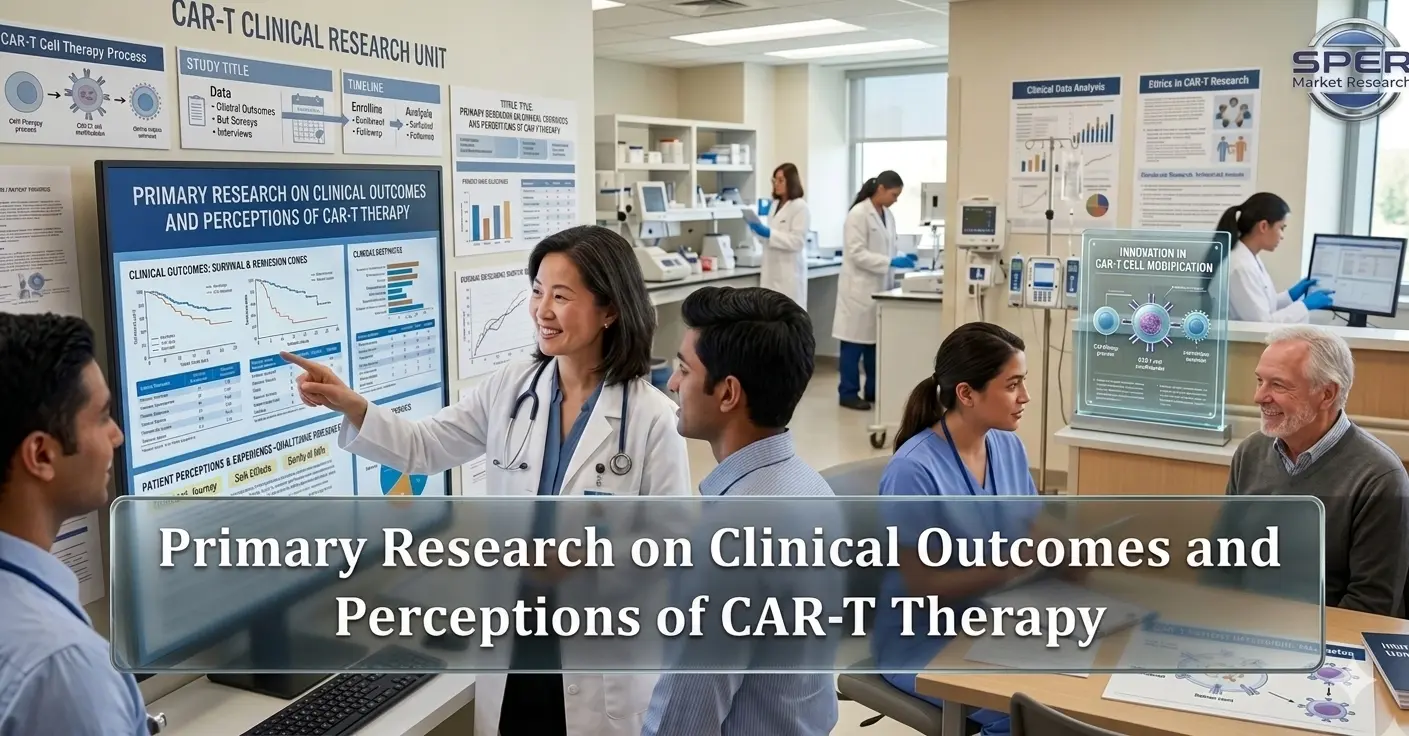
Primary Research on Clinical Outcomes and Perceptions of CAR-T Therapy
CAR-T therapy is transforming oncology treatment, increasingly supported by CAR-T therapy intelligence platforms that enable better clinical and market insights.
1. Research Overview
Sample Size: 50 respondents
Respondent Type:
- Oncologists
- Hematologists
- Immunotherapy researchers
- Oncology nurses
- Clinical trial coordinators
Region Distribution
- United States – 30 respondents
- Europe – 20 respondents
Method: Online questionnaire survey
Research Objective
- Evaluate awareness and clinical usage of CAR-T therapy
- Assess perceived treatment outcomes
- Identify challenges in accessibility and safety
- Analyze patient response and survival outcomes
2. Survey Questionnaire and Response Analysis
Question 1: Are you familiar with CAR-T therapy?
| Response | Number | Percentage |
|---|---|---|
| Yes | 46 | 92% |
| No | 4 | 8% |
Objective Outcome
- Majority of healthcare professionals are aware of CAR-T therapy.
- Indicates strong awareness among oncology professionals in developed regions.
Question 2: Have you been involved in CAR-T therapy treatment or research?
| Response | Number | Percentage |
|---|---|---|
| Direct clinical involvement | 22 | 44% |
| Research involvement | 14 | 28% |
| No involvement | 14 | 28% |
Objective Outcome
- Nearly 72% of respondents have direct or research involvement.
- Indicates growing adoption of CAR-T therapy in oncology practice.
Question 3: Which cancers do you most commonly see treated with CAR-T therapy?
| Cancer Type | Responses | Percentage |
|---|---|---|
| Leukemia | 20 | 40% |
| Lymphoma | 18 | 36% |
| Multiple Myeloma | 8 | 16% |
| Solid Tumors | 4 | 8% |
Objective Outcome
- These findings align with trends in personalized cancer treatment programs
- CAR-T therapy is mainly used in hematologic malignancies.
- This aligns with clinical evidence showing strong responses in B-cell cancers.
Question 4: How effective do you consider CAR-T therapy compared to conventional treatments?
| Response | Number | Percentage |
|---|---|---|
| Highly effective | 30 | 60% |
| Moderately effective | 15 | 30% |
| Slightly effective | 4 | 8% |
| Not effective | 1 | 2% |
Objective Outcome
- 90% perceive CAR-T as moderately to highly effective, especially when analyzed using AI-driven CAR-T analytics platforms.
- Clinical trials show overall response rates up to 70% and complete remission around 50% in certain blood cancers.
Question 5: What are the biggest challenges of CAR-T therapy?
| Challenge | Responses | Percentage |
|---|---|---|
| High cost | 18 | 36% |
| Safety concerns | 12 | 24% |
| Limited availability | 10 | 20% |
| Complex manufacturing | 10 | 20% |
Objective Outcome
- Cost and infrastructure remain the biggest barriers.
- Similar challenges are also highlighted in oncologist perceptions in NMIBC
Question 6: What patient outcomes have you observed after CAR-T therapy?
| Outcome | Responses | Percentage |
|---|---|---|
| Complete remission | 18 | 36% |
| Partial response | 17 | 34% |
| Stable disease | 9 | 18% |
| No response | 6 | 12% |
Objective Outcome
- Majority of patients experience clinical benefit (70%).
- Long-term remission is possible in a subset of patients.
- Learn more about evolving challenges in CAR-T therapy and CRISPR advancements
Question 7: What adverse effects are most common?
| Side Effect | Responses | Percentage |
|---|---|---|
| Cytokine Release Syndrome (CRS) | 22 | 44% |
| Neurological toxicity | 15 | 30% |
| Fatigue | 8 | 16% |
| Infection | 5 | 10% |
Objective Outcome
- CRS is the most frequently reported complication.
Question 8: Do you believe CAR-T therapy will become a first-line treatment in the future?
| Response | Number | Percentage |
|---|---|---|
| Yes | 32 | 64% |
| Maybe | 14 | 28% |
| No | 4 | 8% |
Objective Outcome
- Most professionals expect CAR-T to move earlier in treatment pathways.
3. Overall Findings
Key Insights
- High awareness (92%) among oncology professionals.
- CAR-T therapy mainly used for blood cancers such as leukemia and lymphoma.
- 70% clinical response rate perception aligns with clinical trial data.
- Cost and infrastructure remain major barriers.
- Most respondents believe CAR-T therapy will expand significantly in the future.
4. Conclusion
The survey results indicate strong confidence in the clinical effectiveness of CAR-T therapy among healthcare professionals in the US and Europe. Respondents observed high remission rates and significant clinical improvement in patients with hematological malignancies. However, widespread adoption is still limited by treatment cost, safety concerns, and complex manufacturing processes.
Overall, CAR-T therapy represents a transformative advancement in cancer immunotherapy, supported by CAR-T market intelligence solutions that improve decision-making and adoption strategies.
Related Solution:
Explore how our AI-powered CAR-T intelligence platform delivers insights into therapy outcomes, clinical performance, and market trends:
CAR-T Intelligence Platform